

UK

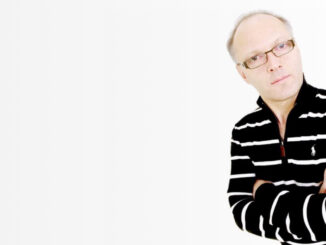
BBC radio presenter Johnnie Walker has died at the age of 79

BBC Radio 2 presenter Johnnie Walker has died aged 79.

The sad news was announced by Bob Harris on the station this afternoon (Tuesday, 31st December 2024).
His last show was on BBC Radio 2 earlier this year and he has been a radio presenter for almost 60 years.
Tim Davie, BBC Director General, said: “We are deeply saddened by the news of Johnnie’s passing and our thoughts are with his family and friends, as well as everyone at Radio 2.
“Johnnie was a pop radio pioneer and a champion of great music, entertaining millions of beloved listeners on the BBC across decades, most recently hosting two shows on Radio 2. No-one loved the audience as much as Johnnie, and we loved him back.”
BBC Radio 2 is currently paying tribute to Johnnie at the time of publishing.
Tiggy Walker, Johnnie’s wife, says: “I couldn’t be more proud of Johnnie – how he kept broadcasting almost to the end and with what dignity and grace he coped with his debilitating lung disease. He remained his charming, humorous self to the end, what a strong amazing man. It has been a rollercoaster ride from start to finish.
“And if I may say – what a day to go. He’ll be celebrating New Year’s Eve with a stash of great musicians in heaven. One year on from his last live show. God bless that extraordinary husband of mine who is now in a place of peace.”
Helen Thomas, Head of BBC Radio 2, says: “Everyone at Radio 2 is heartbroken about the passing of Johnnie, a much loved broadcasting legend.
“He made Sounds of the 70s and The Rock Show appointments to listen to, sharing his personal memories and tales each week. He loved radio and inspired a generation of presenters, passionately promoting the artists and music he cared about so deeply.
“Johnnie’s wry sense of humour and his warm, open style of presenting ensured he was adored by his audience. The airwaves simply won’t be the same again. He will be very much missed by Radio 2 presenters, staff and listeners alike, and our thoughts are with his wife Tiggy and his children.”
Lorna Clarke, BBC Director of Music, says: “Johnnie was a truly wonderful broadcaster, and a devoted music fan. There was nothing he loved more than introducing new artists, such as The Eagles, Rod Stewart, Lou Reed and Elton John in the early 70s on his Radio 1 show which attracted millions of listeners. We’re incredibly lucky to have had such a unique presenter as Johnnie on the BBC airwaves for so long.”
Johnnie Walker began his radio career in 1966 on Swinging Radio England, an offshore pirate station, before moving to the legendary Radio Caroline, becoming a household name by hosting a hugely popular night-time show.
After the closure of Radio Caroline, Johnnie joined BBC Radio 1 in 1969, continuing until 1976 and establishing a reputation as a DJ who prioritised records above chat. On his lunchtime show, which launched in 1971, he pioneered new names like Steve Harley, Lou Reed, Fleetwood Mac, The Eagles and Steely Dan. Pop The Question and Tuesday Chart Rundown were other well remembered features of the show. Following his departure from Radio 1, he moved to San Francisco in 1976, where he recorded a weekly show which was broadcast on Radio Luxembourg.
Johnnie returned home in the early 80s, and following stints with ILR Radio West and Wiltshire Radio in the West Country, he returned to Radio 1 to present The Stereo Sequence in 1987. In the following years, he also presented shows on the new BBC local station BBC GLR and BBC Radio 5 Live.
Johnnie then joined Radio 2 in 1997, presenting documentaries and depping for shows across the station, presenting his own Saturday afternoon show in 1998. Over 30 years of music knowledge was then channelled into Radio 2’s Drive show (5-7pm) which he hosted from 1999. In June 2003, Johnnie broke the news to his listeners that he had cancer, and would be taking a break. He returned to his show in March 2004, with Eric Clapton’s Hello Old Friend.
Johnnie left Radio 2 Drive in 2006 to present a new Sunday show on the station, whilst also depping for Terry Wogan on the Radio 2 Breakfast show, as well as presenting station specials. That same year he was awarded an MBE in HM The Queen’s New Year’s Honours List for Services to Broadcasting, collecting his award from the then Prince Charles.
Johnnie went on to present two shows on Radio 2 – Sounds of the 70s (from April 2009) and The Rock Show, which Johnnie launched in 2018 with his first guest Ozzy Osbourne.
Johnnie’s last episode of The Rock Show aired on Friday 25th October, 11pm-12am, and his final episode of Sounds of the 70s aired on Sunday 27th October, 3-5pm.
On 10th June 2024, Johnnie and Tiggy Walker appeared on the Jeremy Vine show (from 1pm) as part of a discussion around Carers Week on the programme (12-2pm, BBC Radio 2).
Radio 2 will be paying tribute to Johnnie today in shows and also in the New Year. A collection of programmes showcasing Johnnie’s life and career will be available in BBC Sounds shortly.

Radiodays Europe is happening in March 2025 – use code RTY25ATH to get a discount and join us in Athens! More..

#mc_embed_signup{background:#fff; false;clear:left; font:14px Helvetica,Arial,sans-serif; width: 600px;}
/* Add your own Mailchimp form style overrides in your site stylesheet or in this style block.
We recommend moving this block and the preceding CSS link to the HEAD of your HTML file. */ […]

UK

Radio folk from presenters to presidents honoured in New Year List

Lots of people from the radio industry have been recognised in the latest New Year Honours list, including Steve Lamacq, Myleene Klass, Hugo Duncan, Eamonn O’Neal and June Snowden.

BBC Radio 6 Music’s Steve Lamacq has been made a Member of the Order of the British Empire (MBE) for services to broadcasting and music venues.
MBEs also go to Global’s Myleene Klass for services to women’s health, miscarriage awareness and to charity, whilst BBC Radio Ulster presenter Hugo Duncan is named for services to entertainment and to the community in Northern Ireland.
BBC Radio Manchester’s Eamonn O’Neal gets an OBE for services to charitable causes and people with disabilities.
In addition, Valerie June Snowden, long-serving president of the Hospital Broadcasting Association has been awarded the BEM for services to Hospital, Health and Wellbeing Broadcasting.

Radiodays Europe is happening in March 2025 – use code RTY25ATH to get a discount and join us in Athens! More..

#mc_embed_signup{background:#fff; false;clear:left; font:14px Helvetica,Arial,sans-serif; width: 600px;}
/* Add your own Mailchimp form style overrides in your site stylesheet or in this style block.
We recommend moving this block and the preceding CSS link to the HEAD of your HTML file. */ […]
UK

WCR and Ashdown Radio apply to Ofcom for extending official coverage area

Community radio stations Ashdown Radio in Uckfield and WCR in Warminster have applied to change their transmission areas.
In an application to Ofcom, Ashdown Radio says it wants to add an extra transmitter in Heathfield after it was refused permission to increase its current transmitter power with the aim of extra coverage a couple of years ago.
Meanwhile, WCR wants its 105.5FM transmitter to be powered up to serve an extra 8,419 listeners, giving stronger reception to more people in and around the Wiltshire town.
The Technical Change Request Forms were both published this month on the Ofcom website and decisions on the requests should be made public next year.

Radiodays Europe is happening in March 2025 – use code RTY25ATH to get a discount and join us in Athens! More..

#mc_embed_signup{background:#fff; false;clear:left; font:14px Helvetica,Arial,sans-serif; width: 600px;}
/* Add your own Mailchimp form style overrides in your site stylesheet or in this style block.
We recommend moving this block and the preceding CSS link to the HEAD of your HTML file. */ […]

UK

Emma Barnett interview tops BBC Radio 4’s Feedback listener’s poll

An interview conducted by Emma Barnett on the Today programme has been judged the overall winner of “Interview of the Year” by listeners to BBC Radio 4’s Feedback.

The interview, with terminally ill aid worker Simon Boas, was broadcast on July 4th 2024 and was described by judges as “an absolutely beautiful interview which smacked right to the heart.
Emma spoke to Simon with compassion and integrity, asking straight to the point questions without any soppy sympathy.”
Simon Boas, who died ten days after the interview was broadcast, reflected on his life and those he was about to leave behind. “This is almost certainly my final week, but I am so happy and contented. My lovely wife and parents are about to go through one of the most difficult things in their lives, but we all write chapters and all our lives are little books. They’ll go on writing more chapters when I’m gone.”
On receiving the award, Emma Barnett said, “I’ll always be grateful to Simon for using his precious energy to talk to our listeners in the way he did.”
Nominations for the award came entirely from listeners to Radio 4’s Feedback, and a panel of listeners judged a final shortlist of ten on impact, insight and interviewer’s skill.
Feedback, presented by Andrea Catherwood, is produced in Glasgow by independent producer Whistledown.
“This is the second year we’ve run the award, and it’s clear that listeners have really got behind it,” says Whistledown Managing Director David Prest, “It’s a great way to celebrate those “driveway moments”, the interviews which make a real mark and stay with people for a long time”.
Runners up were John Wilson’s interview with film editor Thelma Schoonmaker on This Cultural Life, and an interview on Today with Saudi Ambassador Prince Khalid bin Bandar Al Saud conducted by Mishal Husain.
Also included in the top ten was a powerful interview with Peter Welburn, a victim of the Hull funeral home scandal, conducted by Peter Levy on BBC Radio Humberside.
The full list of nominations:

Clare Balding interviews Dwayne Fields on Ramblings.
Amol Rajan interviews Rev. Giles Fraser on Today
John Wilson interviews Thelma Schoonmaker on This Cultural Life
Nuala McGovern interviews Paul Ford/Tuam baby scandal on Woman’s Hour
Emma Barnett interviews Simon Boas on Today
Peter Levy interviews Peter Welburn on Radio Humberside
Sian Williams interviews Agnes Nisbett on Life Changing
Evan Davis interviews Laura Trott on PM
Mishal Husain interviews the Saudi Arabian ambassador on Today
Lauren Laverne interviews Mark Steel on Desert Island Discs

Radiodays Europe is happening in March 2025 – use code RTY25ATH to get a discount and join us in Athens! More..

#mc_embed_signup{background:#fff; false;clear:left; font:14px Helvetica,Arial,sans-serif; width: 600px;}
/* Add your own Mailchimp form style overrides in your site stylesheet or in this style block.
We recommend moving this block and the preceding CSS link to the HEAD of your HTML file. */ […]

UK

Blog: BBC investigation concludes ‘systemic failure’ at BBC local radio

David Lloyd writes about the role of BBC local radio saying there’s been a systemic failure at the corporation.

“As unrest hit UK streets last August, citizens were worried. Certain cities hit flashpoint.

That’s when local media comes into its own – informing, questioning and reassuring. No medium is better at the latter than radio where the human voice places context around turmoil and put its arm around the listener.

It’s a role BBC local radio has played excellently for many years.

In April 2023, Ofcom acceded to the BBC’s disingenuous request for a revised BBC Operating Licence to permit more local radio networking. Since then, the BBC has regionalised much local output and shunted out many seasoned broadcasters. Experienced people who knew their patches, knew their audiences, knew their journalism and could command their cities in difficult times.

The BBC however, assured Ofcom, that in times of significant local stories, the stations would still respond and provide an appropriate local service.

On several occasions in the last year, the BBC has failed. It certainly failed at BBC Devon on the night of the violent summer clashes.

That is the Finding (18th December 2024) of a BBC investigation by its Executive Complaints Unit, following a complaint from me.

In that December Finding, Complaints Director Jonathan Greenwood states:

“I have to infer from my investigations that there were elements of systemic failure on the night of 5 August because the staff on duty did not respond adequately to this significant breaking news either due to a lack of training or clear enough instruction.”

The case indicates that the BBC was not honest when it sought regulatory permission from Ofcom to implement its local radio changes. At that time (16th March ‘23), Ofcom wrote: “The BBC has told us (Ofcom) that it expects that major local incidents or breaking local news stories are likely to be of interest within a shared area and so would feature very prominently within shared programmes. As such, the BBC does not expect it would need to routinely scale up its operations to deliver dedicated programming to deal with such events, but it could do so where exceptional circumstances require this”.

The BBC’s December Finding, however, concluded: “Reviewing the output of BBC Radio Devon from 6pm that evening, this “prominent” featuring of breaking news within shared programmes clearly did not happen.  “…there was little sense of what was happening and little evidence of the BBC having a presence on the scene. “…Radio Devon listeners would have had no sense through the evening that the station had a reporter at or near where the trouble was taking place.”

“BBC Radio Devon’s management recognise that the story should have been covered better and there is an acknowledgement that the resources and response required on this occasion were underestimated.”

This a damning yet refreshingly sensible analysis by the BBC Executive Complaints Unit about local radio’s shortcomings in this case – and, I would suggest, several similar cases about which I have registered concerns.

I stress this post is not a criticism of the hard-working, long-suffering staff on the ground at that or any BBC local station. You do your best work and some fine work, even around this very event, but I know what it’s like to be caught up in BBC management madness. I know many of those who work in BBC local radio are as frustrated as am I.

It might be argued that the era of local radio playing a role at times like this is gone.  I’d suggest you don’t understand how some listeners – particularly older ones – still regard radio. Furthermore, that’s not the point here.  If the BBC feels that there is no longer a case for local radio, it should say so, not mislead audiences and the regulator.

BBC local radio in England has lost almost a third of its listeners in three years (Rajar: BBC Radio- England Q3 21-Q3 24). 

In general terms, in failing to understand the rudiments of radio programming and failing to deliver a listener-focused high-quality service, it has driven away audiences. Never before have so few listeners tuned in quite so disloyally.

In the last three years alone BBC local radio has lost over a third of the DE listeners it enjoyed.

The data and the detail clearly indicate that it is providing less public service, less distinctive output – at a greater cost per listening hour. Accordingly, in local radio, the BBC is simply not pursuing its Mission or meeting its Public Purposes.

There are people at the BBC who agree. It is simply not delivering local radio value in the way that sensible people owning that budget and that responsibility could. This is not about cuts, it’s about poor programming nous and utter inefficiency.

Worryingly, however, I am told that this highly critical and very illustrative BBC verdict will not be published by the BBC.  Hence this blog post.

The privileged and byzantine BBC Complaints Process, which demands persistent almost obsessive effort from complainants before anything is taken seriously would have allowed this failure to go unnoticed.

If a community or commercial station errs in the most minor way on a single occasion, its error is publicised routinely by the regulator. But when the Nation’s public service broadcaster concedes it has presided over a systemic failure within a network on which many vulnerable listeners depend – costing £120m of public money – it need not tell a soul.

I believe in the BBC. I really wish it to continue and be appropriately funded to do the job. I fear its worst enemy is within.”

This post was originally published on DavidLloydRadio.com and reposted with permission.

Radiodays Europe is happening in March 2025 – use code RTY25ATH to get a discount and join us in Athens! More..

#mc_embed_signup{background:#fff; false;clear:left; font:14px Helvetica,Arial,sans-serif; width: 600px;}
/* Add your own Mailchimp form style overrides in your site stylesheet or in this style block.
We recommend moving this block and the preceding CSS link to the HEAD of your HTML file. */ […]

UK

Long-lost chat with John Lennon to be broadcast by the BBC

A long-lost chat with John Lennon is to be broadcast by the BBC for the first time in more than fifty years.
The revealing interview, being aired on Radio 4 Extra today (Friday December 27), was carried out by disc-jockey Kenny Everett in 1971 when he was out of work, having been fired by Radio 1 the previous year.
Lennon had just produced his first solo album after the break-up of the Beatles and was immersed in a damaging legal dispute with Paul McCartney over the management of the Fab Four’s assets.
It took place at John’s mansion at Sunningdale near Ascot in Berkshire in March 1971. Lennon strummed on his guitar and played the piano in his home studio.
Kenny asked whether the boys would get back together. John admitted he’d got closer to George and Ringo at that time because of the ongoing court case, and there was a “ninety per cent chance” that the three of them would record together again, but not as the Beatles.
As for Paul, John said that in time he would like to have tea with him, though he didn’t think they’d ever write songs again together.
Few people have heard the interview because Cuddly Ken no longer had a national platform for his work. It was carried the following month by the French-based station Radio Monte Carlo where he briefly worked. But it only went out at 0100 one Sunday.
Its only previous UK airing was on BBC Radio Bristol when Kenny had a month-long stint that summer as weekend holiday relief. The Lennon interview seemed a good way for the “bad boy” of the corporation to re-establish his credentials after his sacking. A remixed version went out on July 3, 1971 in his last show in a four-part series.
It will now be heard nationally for the first time as part of a special week of programmes on Radio 4 Extra to mark what would have been Kenny’s 80th birthday, having been born on Christmas Day 1944. It will be broadcast at 1000, repeated at 1600 and again at midnight, and on BBC Sounds.
The programmes have been digitally restored by journalist and broadcaster Paul Rowley, author of two documentaries about Everett, both of which have been re-broadcast this week on the station.
The former BBC Political Correspondent says: “The interview is a fascinating piece of rock music history when both John and Kenny were at a crossroads in their lives. Kenny’s questions are rather naïve. John’s answers are blunt but amusing, especially when he lowers his voice when talks about “the court case”. It’s a very revealing listen. It was among a number of his Radio Bristol tapes given to me having been safely kept in a cupboard for almost forty years. Thankfully, they were in perfect condition.”
The pair had been friends since 1966 when Kenny covered the Beatles final tour for the pirate ship Radio London when they visited America. Their Liverpool connection helped cement their relationship. Kenny was the first DJ in the world to play “Strawberry Fields Forever” in 1967, regularly sat in on their recording sessions at Abbey Road, and even produced their fan club records.
Kenny Everett died from AIDS on April 4, 1995, aged 50. John Lennon was shot dead in New York on December 8, 1980, aged 40.
Here are extracts from that interview :
KENNY : Are you still friendly with the rest of them ?
JOHN : Well, yea. I play billiards with Ringo and discuss records with George. Of course, we’re seeing more of each other now with the (deliberately lowers his voice) “court case” going on. So in a way that (again lowers his voice) “court case” brought Ringo, George and I closely together again because we had to spend hours on different things, you know. So, we’re pretty damn friendly now.
KENNY : Good. Because I’m pretty sure there are a million people out there that would love to see you all jangling away together again.
JOHN : Well, it’s like 90 per cent that George, Ringo and I would record together again, maybe not as Beatles under that title. Like if I wanted a guitarist to play with me, I would ask him (George), same as I’d ask Ringo to play the drums.
KENNY : When Paul does a single, do you rush out and buy it, and then think “Right I’ll get him” ?
JOHN : I don’t need to rush out and buy it. It’s on Apple (the Beatles’ record label).
KENNY : Do you listen to it and think “the rat” I’ll get him with my next single ?
JOHN : I’d just listen to it, you know.
KENNY : Haven’t you ever heard something that he’s done that you thought “Wow. I must do something like that ”
JOHN : I don’t know about ‘I must do something like that’ but I’ve enjoyed things that Paul’s done.
KENNY : Do you think you’ll ever have tea with him, again ?
JOHN : Sure.
KENNY : So when the fuss has died down, you’d rush at each other ?
JOHN : I don’t know about that, dear, I don’t know about that. But there’s no doubt we’ll see each other, you know.
KENNY : So will the world reverberate to another Lennon and McCartney composition ?
JOHN : I doubt it because we weren’t writing all that much together for the last couple of years anyway.
JOHN LENNON INTERVIEW CHRONOLOGY
Recorded : March 27, 1971 – Sunningdale, Berkshire
First broadcast : Radio Montel Carlo International – April 25, 1971
First UK broadcast : Radio Bristol – July 3, 1971
First UK national airing : BBC Radio 4 Extra – December 27, 2024

Radiodays Europe is happening in March 2025 – use code RTY25ATH to get a discount and join us in Athens! More..

#mc_embed_signup{background:#fff; false;clear:left; font:14px Helvetica,Arial,sans-serif; width: 600px;}
/* Add your own Mailchimp form style overrides in your site stylesheet or in this style block.
We recommend moving this block and the preceding CSS link to the HEAD of your HTML file. */ […]