ASIA

Barix Introduces Reflector EVO Cloud Transport Service at NAB Show 2023

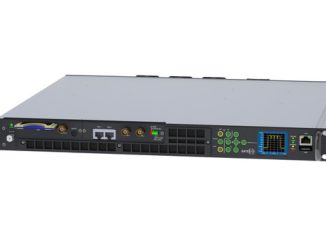
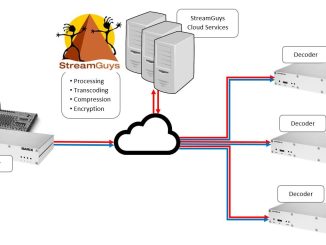
IP audio innovator Barix comes to NAB Show 2023 with Reflector EVO, its next-generation cloud service for audio contribution and distribution. Reflector EVO improves on the original Reflector service, introduced in 2010, by adding guaranteed absolute audio delay, improved stream redundancy, browser-based confidence monitoring and OPUS audio support. Barix will also introduce a new broadcast-specific hardware codec at NAB to pair with the Reflector EVO service.Same as the original service, StreamGuys will provide virtual cloud hosting and 24/7 back-end support, providing broadcasters with an accessible service for unidirectional STL connections, syndicated program distribution, and stream replication for rebroadcasts, retransmissions, and other audio services. The result is a reliable, scalable, and affordable alternative to satellite contribution and distribution with best-of-class service hosting and technical support.Reflector was a true groundbreaker upon introduction 13 years ago. Reflector made it simple for broadcasters to connect an encoder and decoder over the public internet to move high-quality audio. It removed the network configuration challenges of fixed IP address and firewalls, and brought tedious negotiations with network administrators and ISPs to a halt.

“IP networking was largely an unknown entity for broadcasters through the 2000s, and it was a complex undertaking for the early adopters,” reflects Reto Brader, CEO of Barix. “Reflector took the complexity out of the equation. A few clicks in the Reflector UI, a few settings on the hardware devices, and the audio started to flow. More than a decade later, the fundamental value of the original Reflector service remains; Reflector EVO tackles the modern IP networking challenges of larger networks while adding meaningful features for broadcasters.”OPUS audio is among those new features, giving broadcasters a high-quality, bandwidth-efficient option to uncompressed PCM streaming and other compressed audio codecs that Barix continues to support in Reflector EVO. Barix also takes longtime Reflector users into new territory by enabling fixed end-to-end audio delay for the first time. Customers can manually configure encoding quality and the desired audio delay level of the receiving decoder (between three and 30 seconds), with seamless communication between each device from any global location. Primary and backup streams optimize resiliency, recovering lost packets from network glitches through redundant paths and multi-source switchover capabilities.“Cloud adoption is moving ahead in the broadcast community, and Reflector EVO supports the high level of redundancy and scalability that customers expect from cloud services,” said Brader. “We have introduced redundancy to correct for short bursts of data loss and heal those losses in the stream, and expanded enabled fast switching from one encoder to another. That means more geographically distributed source locations, such as backup studios, to optimize redundancy. Scalability has always been a strength of Reflector, which is why it is popular for program syndication and multipoint STL distribution. A few clicks, and a new location is live.”The new corresponding hardware codec, developed specifically for Reflector EVO, can be configured as an encoder and decoder. The codecs feature the same embedded technologies under the hood and are quick to deploy once configured, with simple connections at the transmit (encoding) and receive (decoding) points. The codecs also provide flexible switching options (contact closures, UDP commands), relay support, and selectable input gain.Brader is grateful to continue its partnership with StreamGuys for the next generation of Reflector. “Barix understands radio broadcast requirements such as controlled audio delay through the system, the need for remote contact closures that synchronize with program audio, and so on. StreamGuys is a trusted service provider for live and on-demand broadcast streaming that excels in service reliability and 24/7 availability. The two companies together provide a complete cloud solution for radio broadcasters worldwide.” […]

ASIA

If You’re Going to Prank Your Listeners, Make Sure They’re in on the Joke!!

Content from BPRThe new Netflix documentary, “Pepsi, Where’s My Jet”, is the story of a guy called John Leonard who sued Pepsi for false advertising. While the move backfired on John, the court case shaped advertising laws forever.In 1995, Leonard was a 20-year-old student in the United States, where he was coaching little league football and dreaming of having a successful business. But, a commercial from Pepsi changed the course of his life.

The 90s were all about the cola wars and in a bid to steer Gen Xers to choose Pepsi over Coca-Cola, Pepsi introduced Pepsi Points, which could be redeemed for Pepsi merchandise.What could Pepsi Points buy?In order to understand the difficulty of buying merchandise with points, basic maths needs to be applied. The amount of points a customer would receive was:
A fountain drink = one point
Two-litre bottle = two points
12 pack = five points
After months of saving for points customers would be able to buy the following:
Baseball caps = 60 points
T-shirts = 80 points
Mountain bikes = thousands
And the prize that took Leonard to court…. a military grade Harrier jet = a whopping 7 million points
Now, neither the radio or TV commercials contained any fine print, disclaimer or legal notice telling viewers it was a joke. There was no Harrier jet. But unaware of this, Leonard was on a mission to get the jet, and found five investors to help him achieve his goal.It was too expensive to buy all that Pepsi to get the 7 million points. So, Leonard found a loophole in the fine print. Pepsi Points could be purchased for ten cents a-piece. With the help of his investors, he sent off a $700,008.50 cheque – and sat back waiting for his Harrier jet to arrive.Weeks later, Pepsi responded saying the inclusion of the Harrier jet in the commercial was nothing more than a joke. But Leonard didn’t want to take no as an answer. After filing of legal suits and counter suits, Pepsi offered Leonard a settlement of $750,000, but he rejected it as he was still on a mission to claim the jet. The Pentagon even got involved. In September 1997, the Pentagon announced that Harrier jets were not for sale and would need to be “demilitarized” before being offered to the public, which included disabling their ability to conduct vertical take-offs and landings.Unfortunately, in 1999, the judge ruled in favour of Pepsi, saying no reasonable person would think a Harrier jet was attainable by claiming Pepsi reward points.Leonard might not have received his Harrier jet, but he made history as he changed the way advertising was presented, with disclaimers now an integral part of many commercials.Outside of April Fool’s pranks, duping your listeners with false statements or promises that might seem hilarious to you is a dangerous road to go down. Make sure EVERYONE is in on the joke. Remember the Hooters waitress who thought she’d won a Toyota but instead the restaurant chain gave her a Toy Yoda. She won enough money in the court case to buy any Toyota she wanted…. and then some!By David Kidd, BPR […]

ASIA

Don’t lose them at “Hello”

Selling Radio Direct with Pat BrysonIn a recent training session that I did with one of my clients, we looked at attrition rates for the past year. If you haven’t done this lately, I suggest you do so, but get ready to be looking for the next bottle of your favorite adult beverage. We lose clients for a variety of reasons, some beyond our control. Someone closes, retires, sells, changes managers, changes marketing philosophies, gets upset with us.It’s the last reason I’d like to talk about today. The Internet for the most part has the customer experience done well. From start to finish, the buying process is seamless. This has spoiled consumers. Our clients are consumers also. The last few years have raised their expectations of doing business with us. Our customer process must be easy from start to finish.

Which brings me to the real subject of this newsletter: when I call you or your station, what do I hear?The other day I called a potential client and a real, LIVE person answered the phone. Wow! A receptionist, not a voice mail. That in itself was a reason to mark the day on my calendar. I didn’t have to listen to a litany of “Press one for X, Press 2 for Y, Press 3 for Z”. What happened next was even more unusual. Here’s what I heard: “Good morning. This is ____ with station ____. How may I make your day great?” I nearly fell out of my chair. I also broke into a wide smile and realized that this person HAD made my day great by that simple phrase.What do YOUR clients hear when they call you or your station? Do they get, “You’ve reached XYZ Company. If you know your person’s extension, you may dial it now. Or, hang on the line for an interminable list of extensions.” Or, my personal favorite, “Spell the person’s last name.” Or how about, “Our customer service representatives are all busy. Your wait time will be less than one hour.”I don’t know about you, but my blood pressure has gone up a few notches after dealing with these scenarios. As we talk with our clients about how to entice customers back into their stores, we might want to address making it easy to connect. What happens in that initial contact can make or break what follows.How about us? How is your station’s phone answered? The person who answers the phone is often the first contact potential clients or listeners have with us. Is it positive? Do we sound like we genuinely want to solve their problem? Does the person who encounters the problem follow it through to completion or hand it off to someone else and never think about it again?We have two sets of customers: our listeners and viewers and our advertisers. Both are important to our success.Some great opening lines I’ve heard on voice mail:“I’m so sorry I can’t answer your call right now. I’m out helping my clients to make 2023 the best year ever. I’d enjoy helping you as well. If you’ll leave your name and number, I’ll call you back quickly.”“Sorry I missed your call. I’m out discussing with my clients how to find good, qualified employees. If you’re recruiting, perhaps our stations might be of help. Leave your name and number and I’ll call you back.”“Hi! You’ve reached ___ _____ at XXXXX. Right now I’m out helping my clients create successful marketing campaigns to make 2023 their best year ever. Leave me your name and number and I’ll do the same for you.”Note that all of these focused on what the salesperson is doing for the clients. What problems are we helping them solve? We aren’t out “selling radio or TV” we are out working with our clients to raise their revenue, to help them to solve their ever-evolving business problems.I hope your first connection with customers will put a smile on their face. Be the ray of positivity in an uncertain world. Make it easy to connect with you. Don’t lose a customer at “hello”. […]

ASIA

Dielectric’s new analytics software will be introduced at NABShow2023

Dielectric’s new Apollo advanced analytics software platform will be introduced at NAB Show 2023. Apollo is designed to help radio and TV engineers take quick and decisive action on current problems, and take preventative actions that eliminate potentially disastrous situations in the future.Apollo, which Dielectric previewed at NAB Show 2022, accurately detects anomalies in RF systems for TV and FM broadcasters.

The advanced analytical software is an extension of RFHAWKEYE™, Dielectric’s IP-based remote RF monitoring solution. RFHAWKEYE’s software suite integrates Apollo to help users quickly analyse and formulate site data into actionable reports. These reports can be customized to prioritize important system information and performance trends over selectable time periods.Apollo brings a managed services offering to their portfolio. Dielectric will house Apollo in its new network operations centre (NOC) and provide reports to customers on a quarterly basis that offer performance insights, communicate alarm instances and actions taken, and provide maintenance suggestions intended to reduce system failures and increase performance. Dielectric customers are also provided remote access to Apollo to generate and review system and performance data at any time.Vice President of Sales, Jay Martin, says, “Apollo allows us to create a detailed performance record using the real-time data collected through RFHAWKEYE. With this information, we work with the customer to evaluate any degradation that has taken place over time and in some cases, recommend preventive maintenance to eliminate catastrophic failures and improve service. “We will provide insights into the problems we see and recommend specific actions to take, and also deliver this information within executive summaries that are quick to digest and easy to understand.”Martin notes that Apollo will bring strong value to customers with multiple transmitter and tower sites. One example is how Apollo will observe and capture VSWR measurements from multiple sites connected to RFHAWKEYE’s monitoring platform, and identify any degradation over a specific timeframe. That includes specific instances of when a problem crosses a threshold, and how these can be avoided in the future.He says, “Apollo shines in multi-site situations where customers can create a centralized Apollo experience. “Apollo will provide maps of multiple sites, and users can drill deeper into the data for any site on that map. The reduction in labor will be exceptional for these customers as Apollo removes the burden of manually visiting, inspecting and developing reports for each station. This is a very user-friendly tool for every customer from the single-site owner to networks with large, national footprints.”NAB Show 2023 takes place from April 16-19 at the Las Vegas Convention Center. Dielectric exhibits at Booth W3601. […]

ASIA

Tieline unveils two new MPX codecs at the 2023 NAB Show

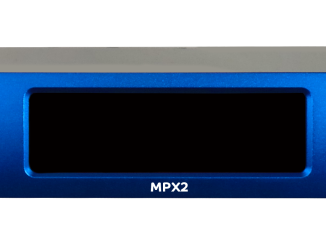
Tieline will unveil two new MPX codecs for the first time at NAB2023.Tieline’s MPX I and MPX II codecs deliver composite FM multiplex (MPX) codec solutions for real-time network distribution of FM-MPX or MicroMPX (µMPX) signals to transmitter sites.The MPX I is ideal for transmitting a composite STL signal from a single station with return monitoring, whereas the Tieline MPX II can transport two discrete composite FM-MPX signals from the studio to transmitters with return monitoring.

Both units support analog MPX on BNC, MPX over AES192, and multipoint signal distribution, to deliver a wide range of flexible composite encoder and decoder solutions for different applications.
                                                  Tieline MPX II Codec to be unveiled at NAB2023
The MPX I and MPX II support sending the full uncompressed FM signal, or high quality compressed µMPX at much lower bit-rates.An optional satellite tuner card with MPEG-TS and MPE support can receive DVB-S or DVB-S2 signals.VP Sales APAC & EMEA, Charlie Gawley, says, “Tieline is excited to unveil two new MPX codecs which leverage our longstanding expertise in audio encoding to flexibly and reliably distribute composite signals to transmitter sites.“By supporting both analog and digital composite MPX signals, broadcasters can transition from analog to digital exciters over time and maximize the value of their MPX investment.”Sending transmission-ready FM composite signals from the studio allows broadcasters to maintain audio processing and RDS data insertion at the studio.This significantly reduces capital and operational costs by eliminating processing equipment from transmitter sites, which reduces on-site power consumption, wiring, and site visits for service and support.Composite MPX over IP signals can be easily replicated and distributed using multicast and multi-unicast technologies and take advantage of rock solid redundancy features like redundant streaming, RIST, FEC, and automated SD card file failover.The MPX I and MPX II are expected to ship later this year. For more information visit Tieline booth #C3008 at NAB2023 or contact Tieline sales: […]

ASIA

GatesAir Amplifies Multichannel DAB Transmission Series for NAB Show 2023

GatesAir, a Thomson Broadcast subsidiary dedicated to wireless content delivery, enters its second century in business with new over-the-air broadcast innovations on the horizon for NAB Show 2023. The second generation of GatesAir’s Maxiva MultiD series of multichannel DAB/DAB+ radio transmitters is first out of the gate, unleashing new benefits such as improved power and bandwidth management, connectivity, and monitoring and control functionality. GatesAir will demonstrate the second-generation MultiD series at Stand W2833, where GatesAir and Thomson will co-exhibit for the first time.The MultiD Series comes from the clever engineering minds of the GatesAir Europe team, which developed the series toreduce the costs and infrastructure of per-site multichannel DAB broadcasting. The original MultiD system integrates three separate transmitters within a single 1RU chassis, instead of requiring a separate transmitter for each channel plus an external combiner and auxiliary hardware. In addition to exceptional space savings, MultiD introduced new efficiencies to DAB broadcasters through independent service inputs and signal processing engines, and a single modulator for three DAB radio services within a single channel band (10A, 10B and 10C, for example).These and other benefits, including adjustable RF power for each transmitter, carry over to second-generation MultiDsystems with remarkable improvements. The new MultiD system design adds capacity for a fourth DAB service, andremoves the limitations of broadcasting all services within a single DAB channel band. This means that MultiD customerscan now broadcast four independent DAB radio services across separate channels (such as 10A, 10B, 11A and 11B).This is useful for broadcasters that were not allocated all licenses within a certain channel, for example.

“The DAB spectrum in Europe typically covers Channels 8 through 12, and each channel can support up to four DABradio program services,” said Ted Lantz, Vice President, Product Line Management, GatesAir. “Our second-generationMultiD system substantially increases overall bandwidth, allowing room for additional services while extending ourfrequency spread between the lowest and highest channel in any MultiD system.”Power output per channel can also now be built to each customer’s specifications. The original MultiD system capped at150 W, which limited users three DAB services at 50 Watts apiece. The new modular design establishes an entirely newplaybook: For example, DAB broadcasters can now order a 1.5 kW MultiD system to support three 500 W services, or a1.2 kW system to support four 300 W services. It is also possible to establish varied power levels across different DABservices. With such exceptional power output flexibility, MultiD systems are now configurable to serve virtually anycombination of power levels for up to four DAB services. The ability to divide system capacity is also useful for MultiDsystems that share different tenants – a common occurrence in road tunnels where broadcasters can effectively consolidate resources to ensure consistent coverage of their most important broadcasts.MultiD’s multicarrier architecture provides the same high-efficiency benefits even when supporting more than one tenantor broadcasting across more than one DAB channel. That includes a sizeable footprint reduction by removing the need forexternal RF combining. MultiD internally combines low-level RF signals, and then generates and re-transmits allindependent DAB services through a single amplifier. The streamlined architecture requires only a single band-pass filterand RF antenna connector for transmission to listeners.The architecture can be further streamlined through advanced IP networking capabilities and single-cable connections.The new MultiD system designs incorporate four separate EDI inputs for IP contribution and distribution. Users can select between IP-based (EDI) and legacy (ETI) connections, providing flexibility to transport signals using both IP andmicrowave connections. GatesAir has also added a secure HTML5 user interface to remotely monitor and analyze signalhealth and performance from any browser.Lantz notes that the updated MultiD system design retains the same energy efficiency of the original version, whichincludes high-efficiency broadband amplifiers. “Even when supporting four DAB services, the MultiD design only requires a single modulator,” said Lantz. “That means we are splitting the energy use and power consumption of a single modulator across all channels, and substantially reducing that consumption per channel. There is an enormous efficiency advantage with MultiD systems when it comes to reducing cost, footprint and maintenance.” […]