ASIA

Radiodays Asia 2023 Programme announced

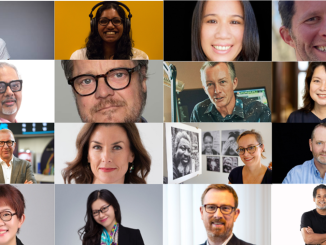
The draft Programme for Radiodays Asia 2023, to be held on September 5 and 6 in Kuala Lumpur, has been announced.On Monday, September 4, there will be a Podcast Design Workshop with DW Akademie and Public Media Alliance.Day 1 on Tuesday, September 5, will start with Opening keynotes and welcoming addresses from radio executives from India, Malaysia and Australia.

Track 1 will feature these sessions in the morning:
The Future of Radio: Transition, evolution and transformation by Kenny Ong, CEO of Astro Radio, Malaysia.
How AI is transforming radio’s entire value by Christian Schalt, Chief Digital Officer at RTL, Germany.
Creating powerful radio – and beyond, a keynote session with Valerie Geller, international radio coach and author from the USA, on how be a great communicator in radio and podcasting.
The power of disruption, a case study which involves hiring an ex-minister for a radio breakfast show after his termination from politics, an unexpected and unique move, with Nazri Noran, CEO of Media Prima, Malaysia.
Radio Plus: Increase revenue by focusing on outcomes instead of output with CEO of BigFM, India, Abe Thomas.
Interactive Car Dashboards & New Revenue Streams with Philippe Generali, CEO of RCS.
Afternoon sessions for Track 1 include:
CADA – Building a new multi-platform audio brand for youth with Emily Copeland
360 – Next generation measurement data  with Deb Hishon, Media Measurement Director, ANZ at GfK
The AI challenge – From Mumbai to Beijing
The AI Advantage – how to leverage AI technology for ratings & revenue  with Paul Kaye Rogers, Canada & Francis Currie, UK
Radioplayer – driving Asian radio into the future with Yann Legarson, CEO, Radioplayer, France.
Rapid response podcast
The Gen Z challenge
 Track 2 will begin in the afternoon and feature these sessions:
Cool tools for your radio station from the podcast world with James Cridland, radio futurologist and editor of Podnews.
Conversations with Richard Fidler with Steve Ahern, ABC Sydney.
The mysterious audio world of Japan with Guy Perryman, producer and presenter at Inter FM in Tokyo.
Visual Audio with David Hua, SBS, Australia.
Malaysia: What is driving audiences to radio? with June Pang, head of the Malaysia media measurement of GfK,
Low cost DAB with Jaqueline Bierhorst, Digital Radio NL and Nick Piggott, Radiateideas, UK
The power of local radio featuring speakers from Malaysia and Australia.
 On Day 2, Wednesday, September 6, Podcast Day Asia will be Track 2, and Track 1 will have the following sessions:
What can we learn from radio’s success in Australia? with Paul Amos, Xtra insights
Music vs Speech: What’s the perfect mix? A panel discussion with Guy Dobson and others.
Audio discovery in car
Audio apps and innovative digital platforms
Successful radio innovations in Asia
How to unlock your leadership with Pascal Grierson, UK and Kenny Ong, Astro, Malaysia.
Radio: Where are your women?  with Andrea Ho, from AFTRS, Australia
Journalism: Covering the Uncovered
What’s next in AI? How will radio and broadcast change?
25 ideas in 25 minutes
Podcast Day Asia in Track 2 all day will have these sessions:
The last 12 months in podcasting – and were we go next  with James Cridland, Editor of Podnews
Same but different – Podcasts across Asia with Guang Jin Yeo, Singapore
Asian podcast listening habits with Timi Siytangco, Acast, Singapore
Common mistakes podcasters make within their first 5 years with Norma Jean Belenky, Podbean.
USA: Telling a compelling story with Gregory Warner, USA, host of the NPR podcast Rough Translation.
Podcast monetisation – how to make money with Kym Treasure, Raven Lim and Timi Siytangco.
The fight for ears: New listening data highlights the pivot on podcast with Kellie Riordan, Deadset Studios, Australia, will unpack new exclusive Australian research on habits, preferences, and profiles.
Showcase: Podcast India
Podcasting is not just audio anymore with Mae Miryam Thomas, India, and others.
KJ – A Malaysian pod success with Khairy Jamaluddin
The best of the best podcasts – Asian success shows
What’s Next for Podcasting
Register for Radiodays Asia 2023 here. […]

ASIA

Philippines: Radyo 630 launches whole-day programming

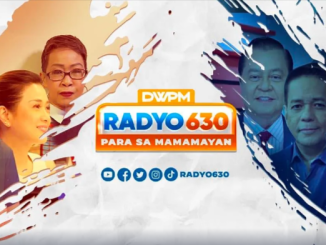
According to a report by Rappler, DWPM Radyo 630 — a joint project between ABS-CBN and House Speaker Martin Romualdez’s Prime Media Holdings Incorporated, started broadcasting nearly all-day programming from July 17.The two companies had announced a joint venture in May, where ABS-CBN would provide content while Prime Media controls the distribution and broadcasting.DWPM Radyo 630 TeleRadyo Serbisyo Para sa Mamamayan (TeleRadyo Service For the People) signals ABS-CBN’s return on free radio, more than three years after it lost its free-to-air channels.

Radyo 630 had a soft launch for two weeks, from June 30 to July 16, with half-day programming from 6 am to 12:30 pm, and the hook-up of ABS-CBN’s flagship news program, TV Patrol, from 6:30 pm to 8 pm on 630 kilohertz (kHz) on the AM band. It started its YouTube streaming on July 3.It features ABS-CBN anchors, reporters and former DZMM TeleRadyo talents filling up the afternoon to evening slots.ABS-CBN sports news anchor Migs Bustos hosts Share Ko Lang, a program on “inspiring and trending” stories from 1 pm to 2 pm.From 2 pm to 3:30 pm, a free legal advice show, Hello Attorney, airs with lawyer Noel del Prado and ABS-CBN reporter Lyza Aquino.The KarTon tandem of ABS-CBN anchors Karmina Constantino and Tony Velasquez moves from the morning to the afternoon with Isyu Spotted, from 4 pm to 5 pm, from Mondays to Fridays. They used to anchor, On the Spot (OTS), on TeleRadyo, from 9 am to 10:30 am.Peter Musngi, also known as the voice of ABS-CBN, returns to the afternoon with ABS-CBN news anchor, Rica Lazo, on Pasada from 5 pm to 6:30 pm.ABS-CBN’s chief of reporters, Jeff Canoy, caps Radyo 630’s whole-day programming with Amy Perez from 8 pm to 10 pm on Kasalo.Prior to the closure of TeleRadyo, the Reuters Institute’s Digital News Report 2023 had ABS-CBN’s TeleRadyo and GMA’s Radyo DZBB as the leading stations with a 13% share each in weekly use. […]

ASIA

Sinéad O’Connor – farewell to an iconoclast

As the exact changing point of the 80s and its new wave pop and rock sensibilities into 90s grunge and techno Nothing Compares 2 U was released filled with such palpable pain, and singer Sinéad O’Connor’s tears, that worldwide we responded.
The song, of course, is Prince’s originally. It was never intended as a single and even after Prince’s death at age 57, only a year older than Sinéad whose death was announced overnight at 56, and a posthumous release, the song is defined by O’Connor.
I’d encountered Sinead before, in 1988, when her Emperor’s New Clothes was a minor hit expressing characteristically that she was not prepared to fit the boxes others had put her into.

The heartbreak ballad was not a new concept then or now. For many that will be how Sinéad O’Connor will be remembered.
For me, and many women, she was so much more.
We love to use the word “brave” for people who have overcome hurdles. Sinéad created them and then ran headlong into the danger.
In October 1992 she appeared on Saturday Night Live as a musical guest and ripped up a photo of Pope John Paul II while proclaiming “fight the real enemy”. This led to a ban from the show and the network NBC for life.
Two weeks later O’Connor was invited by Bob Dylan to appear at a tribute concert at Madison Square Garden, where she was booed off stage, in tears, to be comforted by Kris Kristofferson. It would be nine further years before John Paul II acknowledged sexual abuse within the Church.
She also refused to perform if the US national anthem was played before any of her concerts and withdrew her name from consideration after being nominated for four Grammy awards.
Her personal life was tempestuous too, with relationships with Peter Gabriel (which she penned the beautiful Thank you for hearing me about) and Frank Bonadio making headlines and the 2022 death of her seventeen-year-old son Shane seemingly breaking her irreparably.
It was my university boyfriend’s mother who introduced me to Sinead beyond Nothing Compares 2 U, and the movie In the Name of the Father.
The film stars Daniel Day-Lewis and Emma Thompson and is based on the true story of the Guildford Four. The soundtrack’s original tracks written by U2’s Bono and Gavin Friday. Sinead once said she had to outlive Bono so he wouldn’t speak at her funeral. Yet, he wrote for her You Made Me the Thief of Your Heart, which appears in that film, and took my breath away.
In an increasingly watered down world, Sinead O’Connor was Guinness. Not an icon, but an iconoclast, and one of the last of her types.

Jen Seyderhelm is a writer and editor for Radioinfo […]

ASIA

Even more speakers announced at Radiodays Asia 2023

Even more speakers have joined this year’s Radiodays Asia, the leading radio and podcasting conference in the Asia-Pacific, to be held 5-6 September in Kuala Lumpur, Malaysia.Guy Dobson, Director, Asia Radio ConceptsGuy Dobson’s audio career spans over 40 years and includes a global footprint that encompasses launching and consulting to radio stations in China, Europe, Malaysia, Thailand, India, New Zealand and Australia.  As CEO of Austereo Pty Ltd he drove it to further success and oversaw its sale to Southern Cross Media for $900 million. As Managing director of ESP Mediaconsulting under the guise of the wise Greg Smith, the company became the first international consultants into China reformatting the SMG (Shanghai Media Group) from block programming to format radio. Recently Guy’s been involved in podcast consulting for Sony Music Entertainment, and for radio network ownership in Australia and the USA. Right now, with Asia Radio Concepts he’s excited about taking super brands like LFC (Liverpool FC) to terrestrial media.Philippe Generali, President/CEO RCS worldwidePhilippe joined RCS USA in 1996 as Product Manager and served as Vice President of Operations. In 2000, Philippe was promoted to President of RCS.In 2003, he created a new division, Media Monitors, the highly successful market research company that employs RCS fingerprinting technology with several data production centres around the world.  In 2007, Philippe added the duties of President/CEO of Florical Systems division, a leading television automation company. In 2010, he took the helm of Mediabase.  Prior to moving to the United States, Generali was the head of RCS Europe, where he spearheaded the company’s growth for more than a decade. Generali is an established leader in computer technology and management, stemming from his early school days in radio, with a technical engineering background. He was the driving force behind the US music research index, Mscore and the listening analysis tool, Audience Reaction, for which he was recently granted several patents.  He is a member of EGTA and sits on the IRTS board.

Barbara Gruber, Program Director, DW Akademie, GermanyDW Akadamie is the journalism training and media development division of Deutsche Welle, Germany’s International Broadcaster, and leads the Akademie’s PodcasTraining Project Team. Since the beginning of 2021, the team has partnered with MethodKit in Sweden to develop the new MethodKit for Podcasts and designed various PodcasTraining modules that have been implemented in Kenya, Tanzania, Ethiopia, Malawi, Namibia, Burkina Faso, Ivory Coast, Cambodia, Thailand and Ukraine.Radiodays Asia is a collaboration between Radiodays Europe, the world´s largest and leading conference for radio, audio and podcast, and broadcasting and podcast partners in Asia and Australia. The 2023 edition will run over two days in two tracks with 50 sessions. Top international speakers and industry leaders as well as successful producers and market experts will share their insights.Register for Radiodays Asia 2023 here. […]
ASIA

AI is “more important than fire or electricity,” says Google CEO

Audio Intelligence with Raoul Wedel – – A monthly update on the state of all things  AI and AudioA technological revolution is unfolding, and according to Google CEO Sundar Pichai, AI is “more important than fire or electricity.”

Open AI CEO Sam Altman believes it has the potential to cure diseases, address climate change, and provide private education to everyone worldwide. At the core of this revolution is audio technology, which is set to transform the broadcast radio and podcasting industries and redefine the way professionals work in these fields.In the late 80s, the biggest innovation for broadcast radio in history was the introduction of the first radio automation systems, capable of running 32 kHz audio files stored on a 20 MB hard drive. Since then, tech giants like Google, Microsoft, and Facebook have dabbled in audio technology, but none have truly succeeded in dominating the space. Apple, however, has remained active in the music industry through the iPod, iTunes, and Apple Music. Meanwhile, other media and technology companies like Spotify, Sirius, and Pandora have flourished.The year 2023 has been a turning point, witnessing an unprecedented acceleration in audio technology innovations that will enhance the broadcast radio and podcasting experience. Industry giants like Facebook, Google, OpenAI, and Microsoft are investing heavily in the development of advanced audio technologies, driving rapid advancements in the field. The ultimate goal is to achieve multi-modality systems capable of processing text, video, and audio input and output, which will revolutionise content production and distribution for radio and podcasting.Last year, OpenAI unveiled Whisper, a groundbreaking speech-to-text system that can recognize speech despite background noise and support various accents. In 2023, Google introduced AI Soundstorm, a powerful technology capable of speech-to-text and text-to-speech conversions in 1.100 languages. These open-source technologies can be used to transcribe radio broadcasts and podcasts, making them more accessible and searchable for listeners. The foundation for AI voice technology was laid by (Google) Deepmind’s WaveNet, which has inspired many current AI voice technologies like Respeecher, Resemble.AI, and Elevenlabs. These advancements in AI voice technology could enhance the quality of radio broadcasts and podcasts, as well as introduce new synthesized voices for various applications.The impact of these technologies on professionals working in the broadcast radio and podcasting industries will be multifaceted. For content creators, the ability to clone voices and generate AI-driven sound effects will enable them to develop richer, more immersive audio experiences. Radio hosts and podcasters can create diverse, engaging content without needing to rely on costly equipment or a large team of collaborators.Journalists and reporters will be able to take advantage of speech-to-text technologies to rapidly transcribe interviews and other audio content, allowing for easier archiving, referencing, and sharing of information. In addition, AI-generated translations will enable content to reach new audiences, breaking language barriers and promoting cross-cultural exchange.For radio stations and podcast networks, AI-driven audio editing and source separation tools will streamline the production process and reduce the need for manual intervention. This will allow producers to focus on higher-level creative tasks, such as storytelling and audience engagement. Furthermore, AI-generated music and soundscapes will provide endless options for background scores, eliminating the need to license tracks from external sources and reducing production costs.Accessibility will also be greatly improved, as AI-powered transcription and translation services make radio broadcasts and podcasts available to a wider audience, including those with hearing impairments and non-native speakers. This will lead to more inclusive and diverse content, fostering a global community of listeners and content creators.However, the rapid acceleration of AI and audio technology in 2023 also raises concerns regarding job displacement and the potential loss of human touch in content creation. Radio and podcast professionals will need to adapt to these new technologies and focus on developing skills that complement AI-driven tools, such as storytelling, audience engagement, and creative problem-solving.          “Professionals in these fields must adapt and evolve…”Like it or not, the rapid acceleration of AI and audio technology in 2023 is reshaping the broadcast radio and podcasting industries, bringing forth innovative content and enhanced listening experiences for audiences worldwide. As the race for dominance in this new frontier intensifies, the potential for transformation and growth in these industries is immense. Professionals in these fields must adapt and evolve, harnessing the power of AI to create more engaging, immersive, and accessible content for listeners around the globe.Main Photo: Maurizio Pesce from Milan, ItalyAbout the AuthorWith a career in the radio industry spanning more than 30 years, Raoul Wedel is CEO of Wedel Software, a leading international provider of broadcast software solutions. In 2021 he launched the Adthos Ad Platform, bringing broadcast-quality AI and synthetic voice technology to the audio advertising industry for the first time. The platform continues to deliver more market firsts, including the option of creating 100% AI-generated audio ads. […]

ASIA

Indian minister says Government planning to auction 808 channels in 284 cities

India’s Union Minister for Information and Broadcasting, Anurag Thakur said that the Government planning the auction of 808 channels in 284 cities under the third batch of e-auction soon.He was speaking at the 8th and 9th National Community Radio Awards, during the Inaugural Session of the two-day Regional Community Radio Sammelan (North) in New Delhi.Commenting on the expansion of reach of radio in India, the Minister said that today 80 percent of geographical area of the country and over 90 percent of population is covered by radio.

India presently has 388 private FM radio stations in 284 cities across the country.On Community Radio Stations (CRS), Thakur said that that the Government has made earnest efforts to reduce the time taken to establish such stations. While earlier acquiring a license took around four years, today it can be acquired within six months.Presently, there are a total of 449 Community Radio Stations in the country, out of which 70 percent are in the rural areas. Around 100 odd organizations have been permitted for establishment of CRS.Thakur said the Community Radio stations provide their service despite several challenges including human resource shortage, financial strains and lack of external support and for this spirit of nation service they ought to be commended. While the awards encourage the stations, the Minister said, they also recognise the importance of Community Radio in education, awareness generation and problem solving in the remotest corners of India. […]