ASIA

Podcasting: Recent trends and future goals #RDA23

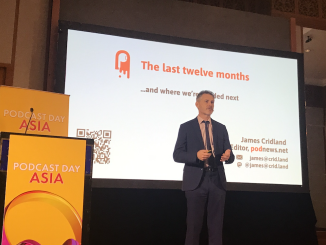
James Cridland, Editor of Podnews, looked back at the last twelve months in podcasting trends, news, and growth at RadioDays Asia, then looked forward to the kind of industry that should be built for the future.Changes in the previous 12 months were:– Spotify cut 200 podcast jobs, 2% of the workforce due to lack of revenue for the investment made.– Youtube podcasting is coming to Asia.– On demand audio is now more popular in the US than live audio.In the UK podcast listening has grown dramatically  since 2015. The recent survey data (RAJAR MIDAS, March 23) show the following trends:– 93% of people listen to podcasts alone– 78% of all podcast listening is done on a mobile phone– 63% listen to more than half of their downloaded podcasts– 62% of all podcast listening is done while at homeAccording to Cridland, goals for the future of podcasting should be:– more shows people want to hear– more focus needs to be on the amount of time people are spending on engagement with podcasts, rather than just downloads, as this can be monitised– Spotify needs to be based on a consumption model.Cridland ended with a warning about locking down too much behind single platforms and paywalls. “The history of podcasting has always been open. New features can be added including RSS which keeps podcasts open.  Be careful of the BBC model which stations like Danish Radio have adopted, as they are locking down content and have a closed model. The focus needs to be on the open podcast model because it helps growth.”James Cridland’s overview was followed by a series of experts from the Asia region who gave their analysis of the Asia market. […]
ASIA

Lessons in attracting young listeners from CADA’s Emily Copeland #RDA23

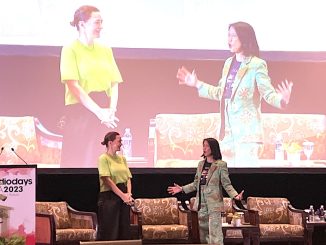
“CADA is a youth media brand not just a radio station,” Emily Copeland told RadioDays Asia, providing insights into how to attract youth audiences.The station features “one of the most diverse lineups of talent” and has “extended the traditional commercial radio format” to multiple platforms to create a content ecosystem.“Our audience keeps bouncing around in our ecosystem,” which has millions of connections each week, said Copeland. The station is now the number one station in breakfast and drive shifts in the DAB+ Sydney ratings. In six months the station had achieved 1 million podcast downloads of programs such as Flex and Frooms breakfast show and, in the first six months of this year has 20 million TikTok engagements and 77 million on Instagram.“There were a lot of negative headlines around youth audiences and radio, there was discussion about young listeners turning away from radio. But I felt strongly that the problem was not that audiences were turning away, but they radio was not offering them what they wanted in the format they wanted it.”The success of CADA is so far showing that young audiences will embrace radio if the right approach is adopted. Strategies and learnings from the station, which is about 18 months old, include:
18-29s spend a lot of time on their phones, looking for content and connections. These are two things that radio is excellent at providing if you get it right.
The average young listener has a listening span of 8 seconds… our content “needs to move at the speed of youth culture… There are few mediums that can move at that speed, but radio can.”
CADA saw its opportunities for success in:
Multiple platforms
Representation of the target audience
Mainstream – popular music and culture
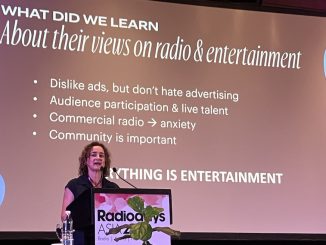
“When we surveyed our potential audience they said they felt overlooked.” They did not find themselves represented in media and there was no content that interested them. According to Copeland, youth offerings felt vacuous, too focused on celebrity, or too opinionated and political.So what did they want? Copeland asked them and this is what she found:
They dislike ads but don’t hate advertising
They value audience participation and live talent, which is something that music streamers like Spotify cannot offer
They found traditional commercial radio content anxiety producing
They believe that community is important and want to fell part of a community
“To them it doesn’t matter where the content sits… They trust certain content creators just as much as they trust the media platform or brand and station.”With these insights Copeland developed a vision and strategy for CADA, which was originally a Sydney hip hop format.=“We wanted CADA to stand for belonging, to reach audiences wherever they are consuming it. Talent, diversity and cultural credibility have come through faces and voices representing young Australia today.”The station chose on air talent that didn’t necessarily have a background in radio, what they were looking for was that the talent connected with youth audiences. “We have a 3.6 million reach, we reflect what young Australia looks like today.”The station has both a traditional radio studio and a video production studio, which allows it to turn around content at a fast pace.Because the on air talent already have established public roles and other projects, they are not always able to commit to full days at the station, so Copeland has found ways to work smarter to get the most from the talent and devoted a lot of time to helping them learn the new radio environment.We take a content multiplier approach, a one hour recording can make 3 hours of radio and be also be recut for social content.Advertising is integrated into content whenever possible, using a partnerships driven content model. Relevance and community are the keys to attracting the young audience. “Reflect their interests and be where that are,” she said.RadioDays Asia is taking place in Kuala Lumpur this week. More reports on radioinfo.asia. […]

ASIA

Preventable Podcast Pitfalls #RDA23

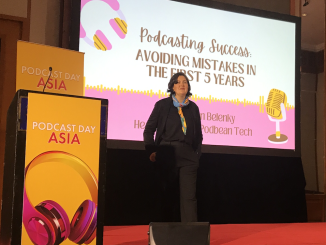
During the morning session of the Radio Days Asia Podcast Day, Norma Jean Belenky, from Podbean Indonesia, addressed the most common mistakes podcasters make within their first 5 years.The following are preventable, podcast pitfalls and some suggested solutions:
Lack of a clear niche:

What makes your podcast stand out?
Be clear on your goals from day one.

Ignoring audio quality

Edit for consistency, note sound consistency, sound signature
Kow that you will grow your podcast quality as you go

Inconsistent release schedule

Consider consistency of publishing, know when your audience is listening and…
Train your audience when to expect your podcast

Overlooking SEO and Metadata

Use keywords so people find you, use transcripts for inclusivity
Optimise content, bite size key take aways and use a trailer for promotion
Always remember the value to audience of your podcast.

Avoiding networking opportunities

Podcasting is all about collaboration so ASK!
Attend conferences
Reach out to Podcasters that share your niche
Explore advertising swaps

Lack of Promotion

Where are you promoting? Remember email newsletters, social media, in app promotion and…
Word of mouth is the number one way method for promotion, mention to a friend, ask them to spread the word
What and when are you promoting?
Launches
Upcoming episodes
Guests

What value are you offering?

Entertainment
Merchandise

Neglecting Engagement

Use social media and respond to contacts and connections

Building a podcast network

Focus on a podcast within a specific niche or target a specific audience.
Cross collaborate and promote within a network, promote new episodes
Develop relationships with agencies and brands that produce target campaigns

Podbean is a podcast creation, hosting, monetization and distribution company operating worldwide since 2015. Almost 700,000 podcasters use the Podbean service. […]

ASIA

People’s Choice Winners named

Here are the People’s Choice winners of The Radioinfo Podcast Asia Awards as elected by the popular vote of our radioinfo readers.They are for:Land Before Bedtime – Best Children’s PodcastViva la Vida – Best Health and Wellness PodcastThese winners were announced on stage, just moments ago Royal Chulan Hotel in Kuala Lumpur, Malaysia during Podcast Day Asia which is part of Radiodays Asia.Are the two People Choice Awards  the same as the Awards chosen by our distinguished panel of judges?No, they aren’t!As part of the big reveal on  on on stage, were representatives of the top two winners of the Radioinfo Asia Podcast Awards  as chosen by our judges: Shoko Plambeck, producer of “The Evaporated”, Campside Media, Japan, and Tan Li Yi, producer of “The Reading Room”, SPH Singapore. […]

ASIA

Radio disadvantaged unless it can improve offering in the car #RDA23

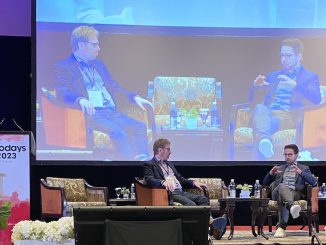
Research conducted by Radioplayer shows that people still do want radio in their cars.81% of car purchasers said they would not buy a car without a radio.Despite the high recognition in cars, radio will have to keep up with the media offering from smartphones to maintain its relevance in the car. Nick Piggott from RadioDNS and Yaan Legarson from Radioplayer explored the strategies for keeping radio relevant in the car and on other digital platforms.We start from a position of strength, but what is the threat? asked Nick Piggott.“The threat is that the radio experience has just a little basic information in comparison to the multimedia offering from connected devices, which offers much richer content to the people in a car.“Once the car is connected to the internet and your dashboard looks like all your phone, then radio is at a disadvantage unless we can improve our offering,” said Yaan Legarson. In a disconnected vehicle the experience for radio is the same as the experience for anything else, such as the CD player, but once a car is connected the experience is enhanced.“We cannot allow radio in the car to look worse than Spotify, which can display album name, artist info, song playing and cover art. If we don’t do that, we look terrible compared with the richer offering from Spotify or other services. Radio can seem very old fashioned in comparison,” said Legarson.Nick Piggott made the point that the worldwide automotive industry needs to hear that the whole radio industry is committed to the one solution. The automotive industry IS interested in working with radio, but wants the radio industry “to take the lead to show that we are serious about integrating radio into the car.” […]

ASIA

Overcome fear of failure to disrupt yourself and your station: Lisa Leong at #RDA23

Radio presenter and podcaster Lisa Leong told the story of how she disrupted herself by changing career from an intellectual property lawyer to a radio announcer during an opening session at day two of Radiodays Asia.From that experience she developed some life lessons which she now shares with businesses to help them improve their staff interaction and energise their teams.An ‘Open Will, Open Mind and Open Heart’ are Lisa’s three key principlesWhen trying to get a job in radio, Lisa sent “hundreds of demo tapes and got dozens of rejection letters,” but one day she faced her fears and cold called the program director for Liberty Radio when he was on air one weekend.“The risk of doing nothing was the bigger than the risk of doing something.” If Lisa wanted to achieve her goal she had to disrupt herself.The PD answered the door and eventually put Lisa on the radio presenting 80s hits on the weekend. “That was 20 years ago, I now present a weekend show on ABC Radio Melbourne and a podcast called This Working Life,” she told delegates.In these disrupted times, we need to disrupt ourselves to reset goals and move out of fear mode to a new level of success.“If we go into fear mode, that won’t help in difficult times,” she said.She identified three key areas for change to help teams move forward:Fear of Failure:Ask yourself, what can go wrong if I fail? In most circumstances the fear of failure causes people not to try, to go back into their shell, but if you can laugh at the failures, learn from them and understand that they are usually not as serious as you think they are then you will move past the fear of failure.She did an exercise that generated laughter at failure, rather than fear. You can celebrate and learn from it, rather than fear failure when you feel psychologically safe, so help your teams to not be afraid of failing. It is up to team leaders to model this behaviour of not fearing failure so that staff will learn from what they do.Open Mind:Lisa used the metaphor of an ‘intellectual piranha’ who eats ideas and prevents them from being achieved. In an open mind exercise she took delegates from using blocking phrases such as ‘yes but…’ to open phrases such as ‘yes and…’ that can expand the ideas in a discussion rather than block them.Lead with Love:She urged teams to discover common ground, common hopes and dreams, and build empathy in the team. This is something that radio does well because it builds empathy.“Empathy is the super power of radio, we use it every day to connect with our audience… Be empathetic to others you work with and also be empathetic for yourself,” she said. […]