ASIA

India’s Red FM launches Quiz India Movement

Indian network 93.5 RED FM, has launched a gaming concept on radio: the Quiz India Movement.It aims to capture the essence of trivia, India’s knowledge and light-hearted fun. The first season of Quiz India Movement began on 2nd October and will run till 19th November.Each season of Quiz India Movement is based on a certain theme. This year, Quiz India Movement by RED FM is giving cricket fans 49 days of rewards with a prize pool of Rs 2.1 million y answering questions on a dedicated microsite. The show is being hosted by cricket expert RJ Raunac.

Nisha Narayanan, Director & COO, RED FM, and Magic FM, said: “The campaign aims to blend the theatre of the mind element with a digital hook, setting it apart from other quiz shows. Quiz India Movement banks on the benefits of traditional radio and a new age platform social media to provide an enhanced audience experience. This year, the show has cricket as its theme, which acts as a fitting launch pad for season one, considering it is time for the World Cup.” […]

ASIA

Entering the “Danger Zone” The First 90 Days

Selling Radio Direct with Pat BrysonYou’ve just sold a brand, new client. Yippee!!!!That’s what we say in Oklahoma when something great has happened.

You worked hard for this one. It may have taken weeks, months or even years to get their agreement. You may have the urge to sit back, rest a little, and enjoy the “win”.Now is when the real work begins. Our new client is now entering the critical first 3 or 4 months of their advertising campaign. In about 60 or 90 days, they will be smack dab in the middle of the “chicken out” period. What is this? How does it work?We know that campaigns created with the radio recipe of enough weekly frequency, long enough, and with a relevant message, still take time to ramp up. That’s why it is imperative that we use OES schedules, make them a minimum of 52 weeks, and utilize great creative. It’s like a train. You hook the engine to the train cars. The train begins to roll, slowly at first, chugging along. As it gains momentum, the train speeds up. Eventually, it reaches maximum capacity. It will continue to travel at maximum capacity as long as the engine is attached. If the engine is disconnected, the train will gradually slow down. But I digress.When we sell a new client, we must have a conversation UP FRONT, at the time we sell them, about the “chicken out” period. We need to forecast what their results will be like, how long it will take advertising to “ramp up”. The worst thing is to have our clients expect to air an ad today and have 50 people running into their store tomorrow shouting our call letters. Of course, in their heart of hearts, that’s what they want to happen. If we don’t manage their expectations, they will think “Radio doesn’t work”.What is this conversation? “Mr. Client, let’s talk about what you can expect to happen. The first people who will mention your ad will be family, friends, maybe some competitors. You’ll probably have some other radio reps come in: they listen to our stations. What you shouldn’t expect to happen is for customers to come in and tell you they heard it. That rarely happens. It will take from 6 to 9 months for your advertising to ramp up. Other clients have told us they see more results in the last 90 days of their campaign than in the first 9 months. I’m not saying you won’t see some results sooner, but that the full effect will take some time. So, please be patient with the process.”

What do we need to do in the first 90 days? We need to stick like glue to our new client. Whatever your agreement for client contact, exceed it. Be in touch weekly either by phone, email or in person. Send them articles on their industry. Refer business to them. Take them coffee, donuts. Invite them to lunch.We like to circulate the new client’s business and contact information to our front desk and our on-air people. Why? Because listeners often hear part of a message and contact us to get the rest of the story. We need to be prepared to direct customers to our clients.Of course, you send a thank you note. It’s a nice touch to have your manager send one as well, or perhaps a well-known on-air personality. These make your client feel extra special.The way we provide exceptional service in these first critical months will set the stage for a happy client or an unhappy one. Go the extra mile!Happy Servicing and Happy Selling! […]

ASIA

Russia’s Sputnik radio replaces BBC Arabic in Lebanon

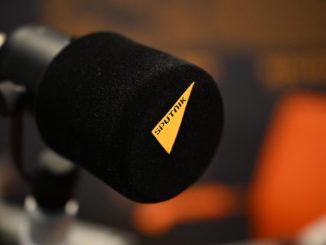
Russian news agency radio Sputnik has taken over the frequency previously used by BBC Arabic in Lebanon, according to a statement published on Sputnik’s website on Monday.The BBC stopped its Lebanon-based broadcasting due to lack of funding in January.Sputnik’s 24-hour Arabic broadcast will also be available in neighbouring Syria.

The programming will include talk shows hosted by renowned Arab journalists and programs covering a wide range of topics from Cairo and Moscow.Additionally, the Sputnik Arabic frequency will air programs produced by RT Arabic.Sputnik Arabic began broadcasting on February 4, 2015. The same year, a multimedia hub agency was opened in Cairo. Sputnik Arabic includes Arabic website and news feeds. The FM-radio broadcasting is transmitted in Lebanon, Iraq and Syria, as well as on the Sputnik official website and in its mobile apps. Combined Sputnik Arabic outlets have a total audience of three million people.“Back in 1938, when the BBC first launched its radio in Lebanon, it chose the ‘This is London’ slogan as its opening line. Now the news bulletin starts with ‘This is Moscow’,” said Chairman of Sputnik Radio in Lebanon Dmitri Tarassov.“Our main focus will be placed on information and analytical content. We will address the hottest international topics and matters affecting Lebanese society since local audiences resonate with social issues the most,” noted Lina Andreichenko, Sputnik Arabic’s managing editor for radio and podcast content.

Russia’s Ambassador to Lebanon Alexander Rudakov welcomed the launch of Sputnik’s radio station on Tuesday, saying he hopes this event “would constitute a new page in relations with the Middle East region, and that the workers in the Lebanon office of Radio Sputnik would contribute to conveying a transparent and true picture of life in Russia.” […]

ASIA

First headline speaker announced for Radiodays Europe 2024

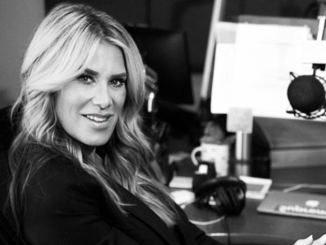
Radio host Ellen K has been confirmed as one of the speakers at Radiodays Europe next March.Ellen is not only the first woman to solo anchor a morning radio show in Los Angeles which is consistently top in the ratings, but she is also the host of nationally syndicated top-rated Ellen K Weekend Show and she brings her knowledge and experience to share with us at Radiodays Europe.After 12 years of successfully co-hosting ON AIR With Ryan Seacrest (on KIIS-FM & nationally syndicated) plus 10 years prior with Rick Dees, Ellen was offered her own morning show on iHeartMedia’s KOST 103.5. Ellen holds the distinction of being the first (and only) female to anchor a morning radio show with her solo namesake in Los Angeles radio history and is also the longest continuously airing morning radio personality in the #1 radio market.

In addition to her work in radio Ellen has voiced the Grammys for 10 years (as well the Oscars, Emmys, and several other ABC and CBS TV projects), she launched an annual fundraiser for Children’s Hospital LA on Giving Tuesday, is an Executive Board Member for Loyola High School and serves as the President of the Hollywood Walk of Fame selection committee.Ellen has been named ‘iHeart Radio Personality of the Year’, honoured with a Star on the Hollywood Walk of Fame and was nominated to the National Radio Hall of Fame.Radiodays Europe 2024 will be held from March 17 to 19, in Munich, the capital of the German state of Bavaria.Register now at Super Early Bird Prices here. […]

ASIA

Embracing the AI Wave: How Media Companies Can Successfully Integrate AI Technologies

Audio Intelligence with Raoul Wedel –
In case you haven’t noticed, the AI revolution is in full swing, and it’s not just about ChatGPT, Image Generation, or AI Voice. It’s about seamlessly integrating these cutting-edge technologies into existing systems. Microsoft has already announced their copilot products for Office and plans to integrate them into Windows. Meanwhile, Meta is rolling out AI features on WhatsApp and Messenger, such as chatbots and image generation.
However, many larger media companies, like iHeart, and other broadcasters in the US are blocking the use of ChatGPT and other generative AI tools like audio, image and video in their organisations as they struggle to keep up with this rapid pace of advancement.

As someone who has experienced the early days of radio automation in the 80s and 90s, I can’t help but see some parallels. Back then, some stations were hesitant to allow computers connected to the internet, which eventually led to disastrous outcomes when virus-infected memory sticks were connected to their systems.
So, how can media organisations manage the risks associated with integrating AI technologies into mainstream communication and messaging?
 Voice
When not connected to large language models like ChatGPT, voice technology has a relatively low risk. However, cloned voices may be used as deep fakes, or voice talents may not have given explicit permission for their use. To avoid legal issues, make sure your voice provider can furnish all the required documentation and consent in spoken word. Some providers, like Resemble.ai, have developed technologies to detect AI-generated voices, but these may be less effective when audio processing is used or played over speakers or phones.
Voice models are typically created using a vast corpus of scientific audio data and audiobooks, posing little risk. Nevertheless, some providers may use user recordings for training data or create unauthorised voice clones, leading to potential legal ramifications.

Audio
Numerous tools have emerged for audio processing that can remove background noise, echo, and separate music from voice. However, separating music from voice can pose a legal threat, such as when a DJ extracts the music from a copyrighted song and uses it in a promo. Being aware of potential copyright violations is crucial for media companies.
Music Generation
AI music generation is a hotly debated topic. Groundbreaking music generation models like Stable Audio have been trained using data they have received consent for, such as from production music site Audiosparx. However, open-source models can be exploited by individuals who train models on copyrighted content and flood platforms like Spotify with AI-generated releases.
Additionally, there’s a random chance that a model may accidentally generate a song similar to a copyrighted track. The risk of using AI-generated music that infringes on copyrights is significant for broadcasters.
On the other hand, haven’t all musicians been ‘trained’ or influenced by other artists? Why should a computer be any different?
Large language models
Large language models like ChatGPT and Bard have become increasingly popular for generating creative content, but they also come with certain challenges. One such challenge is the phenomenon of “hallucination,” where the AI generates content that might be imaginative but isn’t necessarily grounded in facts or reality. While this can lead to interesting and innovative ideas, it can also result in misinformation or content that strays too far from the desired topic.
To strike the right balance, media companies can employ techniques such as fine-tuning these models with domain-specific data and setting strict guidelines on content generation. Additionally, human supervision and collaboration remain essential to ensure the output aligns with the intended message and adheres to journalistic standards. By combining the creative capabilities of large language models with human expertise, media companies can leverage the power of AI while maintaining accuracy and credibility in their content.
The bottom line is that the AI revolution is reshaping the media industry, bringing innovation and enhanced experiences for audiences worldwide. Media companies need to adapt and evolve, harnessing the power of AI to create more engaging, immersive, and accessible content while being mindful of the legal and ethical implications. By navigating this new frontier with caution and foresight, the potential for transformation and growth in the media industry is immense.
About the Author
With a career in the radio industry spanning more than 30 years, Raoul Wedel is CEO of Wedel Software, a leading international provider of broadcast software solutions. In 2021 he launched the Adthos Ad Platform, bringing broadcast-quality AI and synthetic voice technology to the audio advertising industry for the first time. The platform continues to deliver more market firsts, including the option of creating 100% AI-generated audio ads.
Adthos is an international advertiser on the radioinfo group of sites.
Main Pic: Shutterstock

Tags: Adthos | artificial intelligence | Audio Intelligence | Raoul Wedel
Read more from Raoul Wedel […]

ASIA

India: TRAI recommends introducing ‘Low Power Small Range FM Radio Broadcasting’ service

Telecom Regulatory Authority of India (TRAI) has released its recommendations on “Issues related to Low Power Small Range FM Radio Broadcasting’.This followed a request issued last year by the Ministry of Information and Broadcasting (MIB) on the need and timing for introduction of new services such as in drive-in theatres and other use cases of low power small range FM radio broadcasting like hospital radio services, amusement parks, business premises, closed communities such as residential complexes, small habitations, commentary for local events such as air shows and sports events.Low power refers to 1 watt and 500 metres coverage. The recommendations refer mainly to the use of FM for such narrow-coverage services, though “License/Registration/Authorization holders for low power small range FM broadcasting should be allowed to deploy any type of transmission technologies (analogue/digital/ any other)”.

The main features of the recommendations are:
Introduction of a new category of service provider called ‘Low Power Small Range FM Radio Broadcasting’ for provision of low power small range FM Radio.
License/registration/authorization to be granted through a simple registration process via an online application portal.
Approval by Telecom Engineering Centre (TEC) for transmitting equipment for low power small range FM broadcasting.
Eligible entities to hold license registration authorization for ‘Low Power Small Range FM Broadcasting’ are individuals, companies registered under the Companies Act 2013 including LLP and partnership firms. But not political parties, companies with political or religious affiliation or control should be allowed to sue this form of low-power broadcasting.
The permission to operate is between 30 days and five years without any entry levy but requiring some authorization fees depending on the length of the authorisation period (between 1,000 and 10,000 rupees per year). This should be granted online by the Wireless Planning and Coordination (WPC) wing of the Ministry of Communication through online portal within two days of submitting the application. […]