ASIA

Step up your sonic branding: RDE24 Audio Production

Prolark Media’s Lee Price hosted a session at Radiodays Europe showcasing the range of offerings form audio production companies that can make your station sound great in 2024.Three passionate music and jingle producers took to the stage to show off their audio and share thoughts about making great station imaging in a fast moving panel discussion. Some of the key points from that discussion are:What is sonic branding?Branding is an emotion and a feeling. We add a layer of emotion to a brand.Sonic branding says who you are to the listener and gives them a feeling for the station.Jingles are the gearbox for the presenter, allowing them to shift the tempo and flow of the program.The goal of any jingle is to become an ear worm. Something people will instantly be able to recall and remember the name of your station, that’s the holy grail that we are all striving for in sonic branding.Tom Van der Biest, the Creative Director of Brandy was the first to play some audio samples[embedded content]
Why should a radio station invest in branding?Radio is an audio medium, so it should use audio imaging to brand itself. We should use the power of the medium we work in.Adapt your sonic branding to the platforms so you can use it beyond just your radio signal. If you do that you need to adapt it, for example you need to make the jingle shorter for Tik Tok, Youtube has longer form content so your Youtube imaging can be longer. Adapt your audio brand jingle to work across all the platforms you are on.In the past radio’s competition was other radio stations. Now it is so many more audio platforms. Use sonic branding to stand out on all the platforms you are on to build your brand with the various audiences.If you have the chance to work with the strap line of the station incorporate singing it into the jingle. Some station’s only want the name sung for maximum recall, but if you want to add a message as well that’s where the strap line can be used.If you get the sonic branding right it becomes part of your sonic universe, you can build on it for years to keep it fresh. A good strap line can add to the elements that you can use. You will know it’s right when you play it and it gives you a goosebumps moment.Thomas Giger, Branding Consultant & Partner at Pure Jingles presented his set of audio samples, which are in German.
What should stations consider before commissioning jingles?Start with strategy first, what do you want the package to do for you, are you aiming for it to enhance the current brand or do something new?The brief will come in an emotional form, then it’s our job to translate that into notes, instruments and song.Find songs in the station’s playlist that most resonate with the audience and say something about the station’s identity. Listen a lot to the music on the station’s playlist, understand the effect that music has on the audience to inspire the jingle creation.You don’t always have to be big and bold, you can also go minimalist and then change and build that over time.The biggest thing we have been asked lately is to create an audio brand that will work on air, on socials, online, across all platforms. The more platforms there are the more important it is to have sonic brand consistency.Marc Vickers the Senior Producer/Composer at Wisebuddah  & No Sheet Music has a song writing background. These are the audio samples he brought to the session.[embedded content] […]
ASIA

Creating an invitation to come back to radio to youth: RDE24

2024’s Radiodays Europe conference started its final day with sessions addressing bringing youth back to radio as listeners and presenters. Familiar to Australians, Emily Copeland, the former General Manager of CADA, hosted a session called Revolutionising the Search for Radio Talent with German program director of 98.8 Kiss FM an York Strempel. This was followed by Head of BBC radio 1 Aled Haydn Jones and What Gen Z Want From Radio.Emily Copeland had some statistics she’d gathered prior to the launch of CADA almost exactly two years ago. They were that Gen Z:
Felt overlooked by mainstream media
Are always searching for content 
Dislike ads but don’t hate advertising
Enjoy live radio and participation
Trust certain content creators more than traditional media
and, fascinatingly, can find commercial radio anxiety inducing

Aled Haydn Jones
Aled Haydn Jones said from the outset of his session that he didn’t have one key answer but that BBC Radio 1’s approach included:
Reaching out of the bubble, that is increasing the breadth and platforms by which new listeners gave find BBC Radio 1. Jones said the very nature of broad-cast is that radio aims to appeal, broadly, to as many people as possible. But the more broad the BBC became, the more 15-24 year olds were turning off.
Know the strength of what live radio can give you, BBC Radio 1 decided not to let presenters use the generic BBC social accounts but rather build their own via also incorporating and tagging the singers/actors and other stars the on air presenters interview or have performing. Leveraging fan bases has worked well, as has connecting an experience to an event. An example was fans lining up at a music festival at the BBC Radio 1 photo booth to get a picture with musical stars. The image, QR code to access it and the promotion around it all featured the station.
Hearing themselves reflected on radio, similar to Emily’s feeling overlooked by mainstream media above, Aled talked about how radio, and the connection to presenters, can provide a guide to how to feel. Queen Elizabeth’s death was the highest listenership day to BBC Radio 1 in 2022. Presenters were able to allow listeners to call and try to describe their feelings, and they did this on radio more than on socials or television.
Interestingly Aled said that part of his research found that Gen Z watch or listen to something to relax, different to Emily’s finding that commercial radio can be anxiety inducing. Perhaps the hatred of ads is the difference between Australian commercial and the BBC.
York Strempel
York Strempel was a passionate ball of energy which is reflected in the staff he employs and the creativity allowed on Kiss. He played us audio of a deep voiced male presenter who was his “mystery” host. I and the audience thought it was an AI creation. He then showed us a picture of a baby faced 15 year old called Eddie who was the producer of the Morgan Freeman-esque audio. This shy young man had interned at Kiss and York had meet him in a meeting where, as he put it, “his brain couldn’t comprehend the boy and that voice together“. But he took a chance on him, and others, because he saw something in their energy, voice, humour or social presence.His message to the audience was:“Radio is becoming for parents and grandparents. We need to invite youth to come back to radio. Find them. Get them. Train them. Celebrate their talents. Make them stars.”To establish CADA Emily used techniques that aren’t a normal part of radio culture.
CADA sought out content creators who had a social media presence and following. They did not have to have a radio background.
Advertising was integrated into content and had to be cohesive with the presenters, many of whom view themselves as a “brand”, not an individual. This also allowed a selling opportunity for a brand to be integrated into the CADA culture
The cast of CADA was 60% female and 80% non-anglo.
There is a video and radio studio. Presenters were able to have flexible hours and contracts with Flex and Froomes only able to record together one day a week but, for every one hour they recorded, three hours of content could be created.
And, most counterintuitive, the talent’s contracts were flexible too so that existing brand relationships, and future ones, could be integrated into their on air role with CADA, or not.
The last creative idea, which Aled described as “ridiculous” at the time was that four years ago BBC Radio 1 created Presenter Uploader. Over Christmas and New Years, when the regular presenters took their breaks, young people were invited to send in an aircheck to take over hosting the station. More than 1500 entries were received. 30 were chosen. Over the three years since 120 new presenters got a change to skip through agencies and hierarchies to create their own show on BBC Radio 1 and a great many of them continue to do so within the BBC.I’ll leave the last word with York who said:“Please give young talent a chance. When you offer them responsibility, they will perform.”  […]

ASIA

We feel the need, the need for feedback: RDE24

At Monday’s opening session of RadioDays Europe 2024 the General Manager of the conference Peter Niegel said alongside the programmed hot topics of AI and technology, podcasting, attracting youth to radio he had also responded to attendees feedback from 2023 which was more sales related sessions and also feedback for more feedback.The evening previously I had met Roy Strømsnes from Norwegian strategic communication and marketing company Strømsnes Røe. He and business partner Knut Røe were facilitating several of the daily airchecking sessions in a designated Audio Room at the conference. They were all fully booked before the event started.What Roy had identified in the Scandinavian broadcast industry was not just a lack of feedback to on air talent, but also a fear to speak honestly and the recurring chestnut of people receiving a “great show/bulletin/interview” with no additional details.He and Knut run whole day and longer masterclasses where the entire working team come together to learn how to offer constructive feedback and then implement those standards into the regular workings of the company.Within the Hippocratic Oath there is the phrase in Latin: Primum non nocere, or first do no harm. This is central to the values of Strømsnes Røe, Creating a work culture that is safe, and defending oneself is unnecessary.I found it both positive and contrary to my own expectations that the radio industry is yearning for feedback and what they are receiving is superficial. I asked Roy if he would mind me sitting in on one of the sessions, they are closed door safe spaces for participants, and he kindly said yes.There were three tables of five people plus a facilitator. The introductory question was how long people had worked in the industry and again, to my considerable surprise, more than 50% had two decades plus under their belts.They were then asked how much feedback was given in their current environments, which in this instance was a high and positive figure, with Roy saying that is not usually the response and making the distinction between evaluation and feedback. Often, for example, the Monday Breakfast Show will have a post show evaluation but due to lack of time or set benchmarks by which the show is measured, individual feedback goes by the wayside.Knut said, and I felt that many will relate to this, that when he started in radio in 1974 his boss said:“You will never hear from me unless you make a mistake.”The trepidation you then must feel any time you see your manager walk towards you!The groups then were introduced to the concept of positive and alternative behaviour. You speak to what was great in the audio output and then the group could put forward alternative ways it could have been delivered. Roy said that in his masterclasses alternatives offered by a news reader for example to the breakfast DJ could offer a way they’d never thought of before.The other concept that particularly resonated was that feedback be thematic, that is focused on one aspect at a time and not repeating the same criticism each time which builds a culture of defensiveness.With all the techniques the groups went through, Roy and Knut said for a working culture to be changed then feedback needs to become frequent and part of editorial routine.All the participants loved the session, and at just 40 minutes long, lingered as if they wanted more. I don’t think most knew each other and as a team building and bonding exercise it was wonderful to watch.I have no doubt these sessions will return in 2025, with some of this year’s facilitated by the kind of industry voices you might dream of presenting your aircheck too. My feeling is that this sort of masterclass would do wonders for media organisations in Australia. Perhaps we too are yearning for feedback.Jen Seyderhelm is a writer, editor and podcaster for Radioinfo. […]

ASIA

Top ten radio promotions: RDE24

“It’s all about being creative”, said Niall Power Head of Station Sound, Beat 102-103. “Big budgets aren’t everything.”The following is his list of top 10 international radio promotions:
Q music, Netherlands – Forbidden word – The DJ is not allowed to say the forbidden word. Everytime the presenter says the forbidden word the jackpot increases for the listener.
Radio 1 drop BBC – A Halloween promotion. Presenter Jordan North needs to work out who he can trust and who controls the button that can drop him into the water. His co presenter Greg James has planned this act of revenge based on a previous promotion.
Radio Rock – Korporaatio 100 – Two hosts of the breakfast show both turned 50 and decided to take a trip lasting 100 hours, based on a suggested itinerary from listeners. They travelled 3,000 km around the Finnish peninsula and broadcast live every day for 12 hours. Listeners were on hand to greet the presenters and every hand shaken became a new loyal listener.
KIIS iHeartRADIO with Kyle and Jackie O – Cash Cock promotion where listeners had the opportunity to win money for riding the Cock. Host Kyle also had a go at riding the Cock. Great opportunity for laughter and innuendo at rider’s expense.
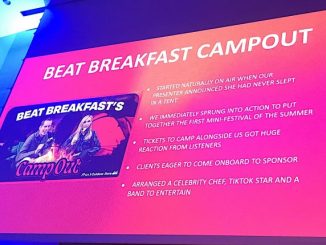
Beat Breakfast Campout – Presenter hadn’t camped out before so the promotion came about to organise a mini summer festival where listeners could get tickets to join the presenters, listeners joined them. Clients were eager to to come on board to sponsor and they arranged entertainment for campers.
Hit Radio FFH – FFH Lie detector competition offered 10,000 Euro prize to the contestant who could tell the truth, even with an interrogation expert, while being strapped to a lie detector, was asking  extremely awkward questions? Promotion took place on air and through socials.
Promotion 98FM’s Dead Air – Halloween promotion where presenters were told one of them would be murdered. Over 9 days listeners tuned in to collect clues. On Halloween Presenter Suzanne Kane was electrocuted and had been murdered! Interrogations were hosted online and on socials. Murder update bulletins  ran on air throughout the day. Killer was revealed the following day and winners announced.
Hometime with Bush and Richie on Tesco mobile – Bush and Richie’s bonus day – One listener had the chance to have a special day organised on the leap day, so chose to do a tour of the haunted underground tunnels. He then had lunch with the  presenters at the Hard Rock Cafe.
Promotion 94.5 Km Capetown South Africa with Carl Wastie – KFM Mystery Mic. Winner of the South African Innovation award. Four non singing celebrities were put in a studio with an audio producer to record their favourite song. Listeners heard one singer per week and had to identify celebrities on Mystery mic to win a cash prize and an experience.
Gold 104.3 Melbourne, Australia, 48 hours of Groundhog day. Sixteen listeners were brought into a cinema to watch the same movie on repeat for 48 hours. The last person left standing would win $20,000.
Power’s key takeaways include:
Ensure the mechanic is not overly complicated.
Give it the “serial effect” – people want to know what happens next.
Ensure the 360 approach but always bring it back to on air.
Big budgets aren’t everything.
It’s all about being creative.
Finally, Power shared advice from Derek Bargwanna Group Content Director, KIIS network, Australia, “The greatest radio promotions should be explained and understood in the title alone. The build and hype is everything.” […]

ASIA

Simple concepts making for a bright future for local radio: RDE24

A radio colleague once said to me about the consistent repetition that is a part of most radio shows that someone is always hearing it for the first time and that by the time we are sick of saying something, the message to our listener is just getting imprinted.I sat in on a session at Radiodays Europe 2024 about The Future of Local Radio and Podcasts. Two women, Stine Kjær and Chris Burns, from Denmark and England respectively are using tactics that are superficially simple and obvious to resonate with their local audiences.This is my first Radiodays conference and the amount of countries represented (65 we were told by organiser Peter Niegel this morning) and people (around1400) is quite overwhelming. I’d wondered if the local podcasts conceived and produced by Kjær and her team at TV2 in Denmark would mean anything to me when I don’t know the places and people involved.Kjær started with around a minute of audio from a podcast that they created around a young local man called Dennis who collapsed and died on a plane trip and was found to have a large quantity of bagged drugs in his stomach afterwards. I was hooked immediately, and unfortunately can’t find or access the podcast to get you or I a resolution on the hows and whys.The point of what TV2 Denmark is doing, is that they are finding hyperlocal stories that have a national appeal. They are employing journalists who can investigate and deliver a story in a compelling fashion, and outsourcing producers and sound engineers to put the final podcast product together. They take several months to produce the main podcast (which was getting more than half a million downloads) with smaller threads or angles to the big story playing out in news bulletins or with additional local features that can be targeted the specific regional area.Chris Burns is the Controller of Local Audio Commissioning for the BBC. At its peak, in 2003, BBC local radio was reaching 8.3 million people. By 2013 radio listening had dropped, with an even steeper decline for local.Burns and BBC Local went back to the basics, believing one of its key pillars is the ability to start at the beginning, for example the local young man who grows up to play for Manchester United and becomes a national name. Sports is also a key pillar of local radio because you can be relentless partisan. Tied into both of the above is another pillar – pride in where you live. If we live where we love, we also love to see locals do well, win in sporting fixtures and look after each other.All of the above is obvious really, and put into practice daily by most Australian provincial and regional radio stations, but this was a refresher and reminder of both what works for me personally and what local radio offers their community that is unique.BBC Local are doing some heart warming initiatives that work with the pillars above. One, that came about during the pandemic, is called Make A Difference, which connected those that needed help with others who can offer it. This has spawned podcasts and Awards via celebrating local unsung heroes.Talented journalists and storytellers can make a small local story have a broader national or even international appeal. Denmark is investing in the journalists that can take the time to create this compelling journey for listeners. The BBC is creating local radio that passionate and partisan about people and place. Burns said BBC Local Audio is replicating the habits of of their listeners. Both methods are contributing to a resurgence of local radio in their regions.By Jen Seyderhelm: Radioinfo writer, editor and podcaster. […]

ASIA

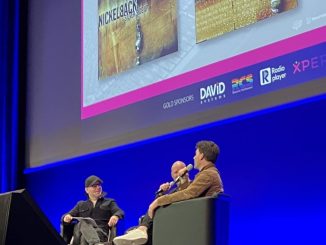
We didn’t tell our story very well at the time: Nickleback at RDE24

The members of Canadian heavy metal rock band Nickleback, Chad Kroeger, Ryan Peake, Mike Kroeger and Brandon Kroeger grew up in a small town with only AM radio.“The station we listened to was great for introducing new music to kids like us, but unfortunately we had no money, so it wasn’t very good for the advertisers. They played  Medadeath, Anthrax and other heavy bands…  that format ultimately went broke and it became a classic hits station or something,” Ryan Peake and Mike Kroeger explained.Peak told the story of hearing the band’s first original song on radio. “I was at a work party when our first song was going to be played on the radio, so I convinced the restaurant to turn on that station, Fox. I was so excited, but when my colleagues heard it, they hated it. That dead-end job didn’t last long after that… then the music and song writing started to take off.”Timing plays as much a part in success as the quality of the song. “It’s not just about the song, it’s  about having the right song at the right time,” said KroegerThe song How You Remind Me, was played on the radio every 3 seconds somewhere in world during the naughties. “When you’re young and aim to take your rock music to the world, that’s everything you want.”Radio airplay is still important to Nickleback, but air play is changing now with music streaming services and other new ways available to find music. Many young people are finding Nickleback’s music and discovering it because it is new music to them.Generating publicity through outrage was another factor in the band’s success. “England is particularly good at outrage, it happened for Alice Cooper when he was naked in a poster with a snake. We had a marketing team that created some controversy around us and the songs leapt to the top. Metal fans bagged us for selling out, being vacuous… I’m really glad for all those people who bagged us, it contributed to our success.”Making the film was an “interesting experiment” according to Kroeger. He feels the band “didn’t tell our story very well at the time, so no wonder many people formed opinions about us because we didn’t give them anything…“We didn’t share enough of ourselves and create our own narrative, so it’s not unexpected that others created a narrative about us.“Now it’s a good time to be Nickleback again. The longer we stay away it seems the better it gets. It’s still fun so we are touring again… when it stops being fun we will stop doing this.”The band has now been convinced to show more of themselves in the upcoming film to reveal more about themselves than had been known in the past. “We have feelings and hearts, in this movie you get to see the human beings that we haven’t shown in the past. Unlike now, where music personalities share everything about themselves on line, at that time we didn’t want to give so much of ourselves over to engage with the fans.”The  Nickleback film, Love To Hate, produced by Ben Sugar, will have limited release soon[embedded content] […]