
ASIA

AI tools for Newsrooms

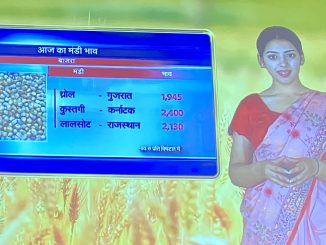
Newsrooms across Asia and Europe have been integrating AI into their workflow progressively over the past few years. With the introduction of Generative AI, they are taking the next steps.At this year’s ABU-Rai Days, news leaders shared their latest insights and tools.All India Radio’s Director of News, Nilesh Kumar Kalbhor (pictured) told delegates that his newsroom has benefitted from the Indian Government’s 2018 digital India campaign which lifted the digital skills of school and university students.“We are well aware of the potential for misuse of AI… we are optimistic but cautious,” he said. In India there is an emphasis on self regulation of AI.India’s national radio and tv broadcasters have put guidelines in place for using AI, which include mandatory labelling of AI content, and informing people about the potential for misuse of AI.Other uses in the national broadcaster’s newsrooms include automatic language translation, research, and management of databases and library content. AI Generated graphics are being used in schools programs.“We produce 600 bulletins per day in 90 languages, AI translation is making that more efficient,” explained Nilesh.Two AI Avatars, AI Krish and AL Bhoomi, now present news stories on the broadcaster’s TV News channel.

“Speech to text is used, but we make sure we have human checking at the last stage before publication because, as a public service broadcaster, we know that our audience cares about accuracy and will tell us if we make a mistake.”The newsrooms offer WhatsApp chat groups for audiences to interact, they have now added AI Chatbots to monitor feedback in these groups  and summarise audience reactions to news reports. “Our newsrooms have become very fast by using these platforms,” said Nilesh.“The Arab Spring changed our traditional skills and practices of journalism, and the construction of news changed drastically during that time,” said TRT World’s News Director Mevlüt Selman Tecim in an ABU-Rai Days session on AI in Newsrooms.That was the beginning of Turkish Radio and TV’s newsroom journey with AI. The most significant areas where AI is being used by the Turkish national broadcaster at the moment are: transcribing; voice and image recognition; language translation; localisation and data analysis.These functions have increased efficiency, sped up the workflow process and enhanced the production process. There was also a need for the broadcaster to rethink its guidelines. “We had to upgrade our style and ethics guides and reinforce our commitment to explaining how we are using AI,” said Tecim.He presented examples of how chatbots are skewing the answers to questions about the Israel-Gaza war and then comparative discrepancy about how AI answered questions about Israel and Hamas.Tecim showed how the Avid Ada chatbot has been integrated as an interactive help system for newsrooms. https://connect.avid.com/ada.html . He also outlined how AI CoPilot is being used by news producers, who are turning news packages into digital formats or changing horizontal to vertical orientations automatically with AIFor live feeds, TRT uses AI for Supers and for tracking what is trending on the internet.Tecim’s advises to use AI “as a tool for creativity, not a replacement,” so that the synergies achieved can lead to innovations and improve organisational structures.Andrea Gerli from RAI outlined how Italy’s national broadcaster is using AI. They use Microsoft’s CoPilot, integrated with some of the newsroom’s systems:
As a content assistant to suggest tags and headlines
To summarise source content from news agencies and other partner sources
Video analysis – they are testing CoPilot to see if it can reliably identify what are the main issues in a video report or raw audio/video footage
Searching RAI’s archival reports to quickly identify content that is worth resurfacing in relation to current news topics
All the AI search engines scrape content without consent, and many don’t acknowledge their sources, so it is difficult to see if the answers being presented to the searcher are based on credible sources. Of the available Open AI search engines, Andrea says that Perplexity at least cites its sources, so that searchers can go to the sources and make their own judgements about the credibility of the source and the AI generated answer to the search question.He also pointed out that all the search engines that are now using generative AI, including Google, Bing and Perplexity, give answers that may decrease web traffic because searchers may feel they no longer need to go to your website if they have a quick answer in a short sentence.RAI is also experimenting with detection tools for fake content. One of those tools is GPTZero which can identify if text is created by an AI bot. However, as the arms race continues, there are also now tools for people to use to ‘humanise’ their AI created content, such as Undetectable AI.AI Watermarking tools are also being developed, but they are constantly being overtaken by tools to circumvent watermarking and reverse image searches.There are some safeguards now being introduced by the tools to prevent famous people being faked, but Andrea is not so sure they always work. And what about people who are not famous, “deepfakes using anyone’s image and profile can easily spread throughout web,” he said.In the early days of Deep Fakes, experts could spot the fakes by looking at the hands moving or listening to the background noise, but AI deepfake generation tools are now being developed to overcome those methods of detection, and they are easily available on the web to help disinformation providers trick the detection bots.“The only way to spot deep fakes in future will be your own knowledge, you will need to have a hunch it is not true and you can only do that if you follow the news and have real knowledge from trusted sources. “In the competition for truth not clicks, public service media will have a special role,” he said.Alexandru Giboi from the European Alliance of News Agencies continued the point, emphasising that it is not just public service media that have a role to play into the AI generated future, it will be all news agencies who take their role in society seriously.“All media is at some point public service… Just to produce quality content is not enough, we have to promote it and also support media literacy in our societies, the public will not distinguish it unless we teach them.”Alexandru said that media which use AI should disclose how they use it and mark content that is AI generated so that their audiences know it comes from a responsible media organisation that is transparent about how it uses AI.“AI is an opportunity for the media, but we need to get it right now, because it will be difficult to change in the future if we get it wrong… Engage with AI and explore it, but in a way that does not damage the authenticity of the news product or undermine your journalists.”Other tools for AI detection that were mentioned include:
Reality Defender https://www.realitydefender.com (a US start up company) can help media detect synthesised voices and faceswapping. “We don’t think there will be a perfect platform for the newsroom to rely on, but this one is useful for now.”
SG Factchecker, is a Mediacorp Singapore developed prototype via OpenAI’s Custom GPT feature. It delivers “close to human quality fact check success for Singapore news,”  according to Mediacorp’s Chua Chin Hon. ChatGPT is providing customised features that can be used by media to create their own tools, but read all the terms and conditions before using them.
Veri.ai is a tool for media to use their own rights owned content in more ways to generate new revenue streams. Luisa Verdoliva, a professor in the Department of Industrial Engineering at the University of Naples is working with this tool along with a group of research partners to evaluate if it will be useful for media https://www.veritone.com/solutions/media-entertainment
Face Forensics++ is a data set of fake faces that can be used to check images against, it is a collaboration between various universities https://opendatalab.com/OpenDataLab/FaceForensics_plus_plus. Watermarks are no longer useful in identifying fakes, “Deep fakes now even contain fake digital fingerprints so we need AI to analyse them,” said Luisa.
Another fake image AI detection tool is Noiseprint, which analyses images using heat and noise maps, See https://grip-unina.github.io/noiseprint  and https://www.researchgate.net/figure/The-robustness-of-the-noiseprint-algorithm-against-compression-and-resizing-a-Without_fig7_353717842
There is a lot of effort being undertaken in the research community to build automatic tools that can be applied to detect fake media. Luisa Verdoliva said researchers are moving from asking  ‘is this video manipulated’ to now ask the more sophisticated question, ‘is this the person it is claimed to be.’Olle Zachrison from Swedish Radio reminded delegates that it is easy to clone any media personality because there are many hours of broadcast content that AI can train on. “It’s easy to clone any presenter within one minute with the audio that is online online.”European broadcasters are working together to fight fakes with AI.Examples include:European newsrooms have joined forces to deliver verified news from trusted broadcasters as part of the European Perspective project, which uses AI to deliver news stories and their original sources to anyone searching through its portal. […]

ASIA

The 2024 Radioinfo Asia Podcast Awards: ENTER NOW

First things first: You must register. Registration is free.Once you’ve registered you can read all the rules and entry details. And, if you’re unsure of anything, or need help uploading your entry, just contact The Radio Today Awards Team who’ll be happy to answer your questions.Once registered, you can start your entry and update it as often as you like between now and the closing date which is at 11:59 pm, Sunday, July 7th..The 2024 Radioinfo Asia Podcast Awards recognise the most outstanding individuals, teams and organisations working within the medium from across the Asian media and marketing landscape.There are 21 categories, which will be judged by some of the most respected leaders and rising stars in the world of podcasts, alongside radioinfo’s panel of international senior editors who cover the growing medium each day.DETAILSPodcast of the YearThe Podcast of the Year will be selected as the Best of the Best from any of the Podcast categories below. The winner will receive the Grand Prize of flights, accommodation and free conference entry to Radiodays Asia 2024 in Kuala Lumpur (you must be available to travel or to send an alternative person if you cannot make it).Categories
Best Children’s Entertainment Podcast
 Best Comedy Podcast
Best Crime Podcast
 Best Education Podcast
 Best Factual Podcast
 Best Fictional Podcast
 Best Health and Wellness Podcast
 Best Interview Podcast
 Best Money and Business
 Best New Podcast
 Best News Podcast
 Best Radio Show Podcast
 Best Society & Culture Podcast
 Best Sport Podcast
Individual Categories
Podcast audio producer of the year.
Podcast executive producer of the year
Podcast host or presenter/s of the year
Organisation Categories
Branded podcast of the year
Podcast publisher of the year (indie)
Podcast publisher of the year (major) […]

ASIA

Use AI to serve creativity not the other way around: ABU-RAI Days

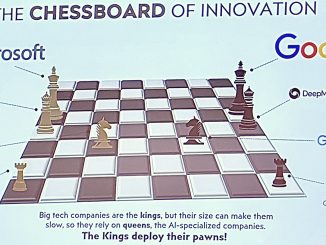
“Be courageous and experiment with ways to support creativity,”  said Rai’s Head of PMO, Annalisa Polcino. “Use AI technology to serve creativity and not the other way around.”This was the advice given in the session titled, Truth and Trust: Preserving identity and creativity in the world of AI, at the ABU-Rai Days conference in Naples where a panel of experts explored the topic.Moderator Olya Booyar, The ABU’s Head of Radio, said that important concepts of how trust and truth are viewed by panel members have lead them to push the boundaries in different ways. Polcino explained how the AI market was transforming investment opportunities, with the United States leading with $348.9 billion invested, followed by China with $95.1 while Australia invested $3 ahead of Spain at $1.8. (source: Netbase Quid, 2022 I Chart: 2023 AI IndexReport).The five main companies (Google, Amazon, Apple, Meta, Microsoft) dominate western technology and this investment represents an amount that is the 13th largest economy in the world. In the chessboard of innovation Polcino sees the big tech companies as the Kings, slow to react so they rely on their queens, the AI specialised companies, and then the Kings deploy their pawns.Media content giants create large models that can be adapted and reused by other companies for their specific and vertical applications  Polcino said Public Service Media need to reflect on the following to determine the best strategy for the organisations transformation.The challenge of AI evolution: Discussing the impact of AI is tricky because of its rapid change.Collaboration with big tech: We can’t compete with Big Tech so let’s leverage their innovations instead. Mastering AI application: The key is to understand how to effectively use AI on others’ businessPSMs focus: PSMs prioritise stability and quality over speed, operating within strict regulatory frameworks to ensure transparency for their users.The following are examples of current projects being undertaken by some of the public service broadcasters on the panel:1. Improving user experience through recommendations and targeted advertisements2. Enriching the content offer by automatic subtitles and audio subscription, plus archive digitisation3. Lightening and accelerating processes of metadata and classification, comparatives, and editing tools4. Enhancing skills by training AI and co-pilot in a test phase […]

ASIA

The next generation of A.I. Broadcasting: ABU-Rai Days Conference

The next evolution of broadcasting will be driven by three types of AI. “A combination of Artificial Intelligence, Audience Interaction and sophisticated Audio Interfaces,” according to Steve Ahern.Speaking at an international conference of European and Asian broadcasters in Naples, Ahern outlined the next strategic technological steps that responsible broadcasters and publishers will need to take as face the future.The current wave of AI technology combines fast, deep learning with large language models to open up new ways for audiences to interact with media. It also poses some potential problems for responsible broadcasters and publishers, which can be solved with strategic planning.Distinguishing responsible from irresponsible media, Ahern referred to his speech at the United Nations in Paris two years ago where he defined responsible media as those that check first and publish after, contrasted with irresponsible media, which publishes first and checks later.In today’s fast moving modern information society, AI, used well, can help to surface good journalism and responsible reporting from trusted sources, to counter disinformation and fake news.Ahern outlined the technological path for broadcasters to follow as they evolve to the next stage of the AI driven information era.“You have trusted, responsibly sourced news, information and entertainment content stored in your systems. Audiences want that content, but as technology evolves, finding it through search will no longer be enough, they will expect it to be presented to them in a faster, more conversational form. Audio will be at the heart of that conversation.”To take advantage of their trusted content, broadcasters and publishers need to reclaim more control of their content, according to Ahern.
Safeguard your content behind strong firewalls so that it is less easily manipulated by third party AI bots
Chose a professional industry grade Generative AI system that does not use the questions, answers and your data to train other systems. If something is free, you are the product. Check the terms and conditions of free systems to see if you are agreeing to give them all your information in return for using their software, if so, don’t use it.
Integrate the Generative AI engine with the synthesised voice of one of your trusted on air personalities or news presenters. Pay them more for the residual rights to use their voice.
When delivering answers, give the audience choices: How long do you have? How much information do you want? Do you want me to show you some video clips on your smart tv? Do you want to hear the voices of people from our radio programs when I quote them? Do you want me to tell you the sources from our archived programs I used to gather this information?
Audience questions help to train the A.I. Safeguard the questions as well as the answers behind your data firewall.
Charge something for the output of your sophisticated interactive offering through a fee, or by bundling it with other things such as subscriptions or advertising. If you are a public broadcaster set a limit to free content per day, geoblock it and charge a fee for content delivered outside your country.
Use sophisticated A.I. tools to detect when other AI bots are using your system and charge them a fee to do so. Only supply the answers to other bots, don’t supply your exclusive sources.
The ABU-Rai Days conference is an annual collaboration of European and Asian Broadcasters covering the latest trends and developments in media and technology. This year it is being held in Naples, hosted by the Italian national broadcaster RAI.The conference continues this week.Steve Ahern is an internationally recognised thought leader in media and broadcasting. He is currently the manager of ABC Radio Sydney, where he has been involved with moving the station to future-ready digital studios in Parramatta. He recently announced he would leave the ABC to resume international training and consultancy activities.Ahern was previously the Director of the ABU Media Academy, Director of Radio at AFTRS, and on the boards of the Community Broadcasting Foundation and one of the world’s first catch-up radio technology companies Rewind Radio. In 2009 he was awarded an Order of Australia Medal for services to broadcasting and education. He is the founding editor of radioinfo. […]

ASIA

Top radio imaging voice Rachel McGrath to share tips, tricks, and insights in free webinar

Benztown, a global leader in radio imaging, voiceover, programming, podcasting and jingles, and P1 Media Group, providing research, strategies and consulting to radio stations worldwide will host a free webinar for radio professionals around the globe, entitled “Getting the Most From Your Station Imaging Voice,” on Thursday, June 13.The free 40-minute webinar will be hosted by Andreas Sannemann, CEO, Benztown, and Ken Benson, Partner, P1 Media Group.It features one of the world’s top radio imaging voices, Rachel McGrath. A Chicago native, McGrath started her radio career as a promotions intern for 97.9 The Loop/WLUP-FM, and quickly realized that being a VO talent and producer was her true calling. In 2012, after years working as Imaging and Commercial Production Director for iHeartMedia in Atlanta, she signed with Atlas Talent Agency and transitioned to full time VO. McGrath’s tenure in radio gave her something treasured – her intuitive ability to know exactly what PDs and Imaging Directors want the second she sees the copy.Rachel’s fearlessness and recognition that she could – and should – be the lead VO, not the archaic secondary, echoey female, has generated tremendous success. With a massive roster from Country to CHR, Rock, and all ACs, it’s nearly impossible not to have heard Rachel being herself. Going off script and into the very core of her stations’ brands, McGrath is known for putting her heart, soul, and life experiences into everything she does, and getting it right – the first time.In Thursday’s webinar, McGrath will share her insights, tips, and tricks for getting the most from your station’s imaging voice, including:
The importance of copywriting to effective station imaging.
How AI will change how she approaches station imaging and how it will affect how stations work with VO talent.
Her practical advice and tips for those who are interested in moving into voiceover as a career, for those just starting out, and for those wishing to grow their VO careers.
Her nonconformist view on giving your station voice direction and why it works.
What does the ideal relationship between the Program Director and VO talent look like?
How she’s overcome challenges in building her VO career, especially as a woman in a male-dominated field.
Her personal favorite stations for imaging and what those stations are doing right.
Register at: https://event.webinarjam.com/register/89/xqxm1hwz. Upon registering, you will receive a link with webinar information. […]

ASIA

Executive Education HEC Montréal Launches Global Media Peace Awards

In a context marked by record military expenditures and global tensions exacerbated by persistent conflicts, the Executive Education HEC Montréal, in collaboration with Pale Bleu Dot Foundation – Japan, is launching the Global Media Peace Awards.This initiative aims to encourage and support peace-building efforts on a global scale. Open to all, these awards will recognize the contributions of radio, television and digital in conflict prevention and resolution.Considering relevant storytelling on peacekeeping as the main topic of the Awards, the accepted media genres in this competition are documentary, reportage, and docudrama. News programs and radio drama will also be accepted for these Awards. The theme / message of the story/ program should be on conflict prevention or conflict resolution.The Awards are presented to the most innovative and remarkable radio, video/television and digital programs/ contents/ stories focused on the proposed topic, with the intent of encouraging high-quality program production.Entries across each category will win C$5000, C$2500 and C$1500 as first, second and third award winners.The awards are open to all public and private media organisations as well as individual content producers.Radio Jury members include:
Dan Santa (Chairperson), Ph. D., director-International Relations, Radio Romania
Andrea Borgnino, Journalist, author, and radio host, Rai – Italy
Irina Kornienko, Director of the Radio Culture Channel of the Ukrainian Public Broadcaster
Giedrius Masalskis, Head of Radio – The Lithuanian Public Broadcaster
Colleen Holder, Dir. Corp. Comms. & Productions, Parliament of Trinidad, and Tobago
Ade Irosadi, Head of LPP RRI- Indonesia
Flavia Voinea, Journalist, Manager of Bucharest FM Radio Romania Regional Network
Digital Media Jury members include:
Manuela Kasper-Claridge (Chairperson), Editor-In-Chief of Deutsche Welle, Germany’s International Public Broadcaster
Rebecca Hanson, Director-General, North American Broadcasters Association (NABA)
Kyung Heekim, Executive Producer of KBS Radio’s Hanminjok Channel
Wendy Everett, Journalist – leading her own media consultancy in Australia
Chevaan Daniel, Group Director of The Capital Maharaja Organization Sri Lanka
Steve Ahern, Manager of ABC Radio Sydney
Akim Mogaji, Expert trainer, Change-maker and Producer-Co-funded New Media Networks (NMN)
Serge Lafrance, Director, Executive Education HEC Montréal, and Associate Professor Member of the UNICON Board of Directors said: “The Russo-Ukrainian or Israeli-Palestinian conflicts, among others, exacerbate global tensions, while the rise of racism and intolerance constitutes another major concern. In the face of these challenges, Executive Education HEC Montréal, in partnership with international actors, is honored to participate in the Global Media Peace Awards, whose main objective is to promote and support efforts to strengthen peace on a global scale.”Shigeru Aoyagi, Founder and Director General, Pale Bleu Dot Foundation, Japan – Former UNESCO Regional Director for Asia and the Pacific said: “Global Media Peace Awards (GMPA), presented jointly by Executive Education HEC Montréal and Pale Bleu Dot (PBD) Foundation, Japan, is more than just an event. It is a platform to recognize and celebrate the critical role played by media creators in promoting peace and its fundamental element, sustainable development. Our planet, Earth, is precious, yet facing crises from conflict to climate change. Peace and sustainability, rooted in our minds, are crucial for a brighter future. Media holds immense power to shape societies and influence our world. As Johan Galtung highlights, positive peace goes beyond the absence of wars and conflicts to foster harmony. Amidst crises, understanding and presenting diverse realities are vital. Let us embark on this joint endeavour for a better tomorrow.”“Today, humanity is facing unprecedented challenges, from natural and man-made conflicts and climate change to environmental degradation. These crises inflict immense suffering on humanity and pose severe risks to our planet. More than ever, there is an urgent need to foster peace, tolerance, mutual understanding, and sustainable development by changing our mindsets, behaviours, and actions. Media can play a crucial role in shaping the public opinion and help bring peace and sustainability,” said Dr Javad Mottaghi, Adjunct Professor, Department of International Business, HEC·MontrealRegister for the awards here. […]