ASIA

Melbourne Radio Wars: A Breakfast Battle #RDA24

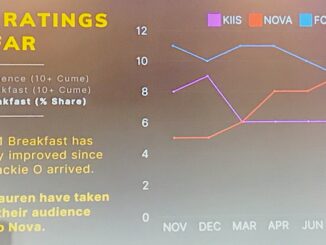
“There’s three world class stations all fighting for a share of the same Melbourne audience,” said Wade Kingsley, founder of The Creative Coach and co creator of the podcast Game Changers Radio, speaking at RadioDays Asia 24. Kingsley says we can learn strategic lessons from this breakfast battle by analysing the decisions made by the main three market players, stations KIIS 101.1 (ARN), 101.9 THE FOX (SCA) and NOVA 100 Entertainment.First some background about the audience in the larger Australian markets in Melbourne and Sydney. The Australian market size (10+) is similar in both markets, over 4.8 million. The audience segment 25-54 years, with a slight female skew is 49% of total listeners in Melbourne and Sydney.The first move was made in late November ’23 when ARN signed breakfast team Kyle and Jackie O with a new $200m contract for 10 years. Next Jase and Lauren were let go from ARN to make way  for Kyle and Jackie O to be networked into Melbourne. Jase and Lauren were then signed by NOVA and have a 7 week start in a ratings period. At FOX Fifi, Fev and Nick start the battle in first place.Kingsley said the ratings so far show that KIIS breakfast hasn’t improved since the arrival of Kyle and Jackie O. Jase and Lauren have taken most of their audience across to Nova.The following are five lessons your station can learn from the Melbourne Radio Wars, said Kingsley.1. Remove long term personalities from your teams at your peril. You may have a view on the future potential of your talent that may not line up with what your audience think. The problem is they might not tell you until they’re gone. You need to go deeper than surface level research.2. Marketing doesn’t solve every problem you have. They spent $3 million marketing a product that’s more sexualised and over the top, asking the audience to make up their own mind about Kyle and Jackie O. It’s tempting to think you are heading in the right direction because you’re spending a lot. The marketing needs to have a clear “job to be done that aligns with your most important strategic challenge” approach.3. Manage expectations internally and externally. Better to play the safe game and be quietly confident rather than noisily incorrect. This especially applies for marketing efforts for your brand. Your Sales team are the best indicator of how others feel about the change.4. When fighting over the same audience, there may not be enough to go around so someone will go hungry. Consider how you can find a niche/ angle that you can build from. Possibly Kyle and Jackie could have focused more on the male audience.5. Friends who are funny still wins on breakfast radio. Think about who your audience would prefer to spend time with. The closer you have those people on the air, the closer you are to success.The team from the podcast Game Changers Radio have proposed a battle plan from the perspective of: A. Market Leader, B. Existing show new market, C. Same show new home. With the next ratings due out this week, all eyes and ears will be on Melbourne to see what survey 6 results bring for all the three warring stations.Listen to the Game Changers: Melbourne Radio Wars podcast here […]

ASIA

IBC Trends 1: Artificial Intelligence

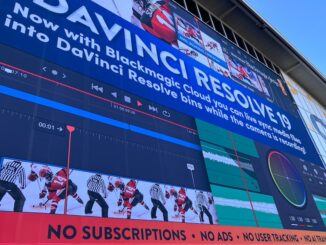
Change is constant in our industry now.What does that mean for broadcasters, streamers, podcasters and catch-up services?During the massive four day IBC Conference and Exhibition in Amsterdam Steve Ahern aims to find out some answers to that question for you.Artificial IntelligenceThe hot topic this year!We have been using AI for years, we just didn’t realise it. AI has been the power behind our second generation search engines and our assisted editing software for a long time now, but it has come out from the shadows over the past 12 months for two reasons: (1) the popularisation of AI technology through the public release of ChatGPT and (2) the amazingly fast leaps in the functionality of the technology due to massive amounts of training data gathered from users.Did you realise that every time you installed a new piece of software and ticked ‘agree’ to ‘share data for improvements’ that you were training the AI engines in your craft?  With that training data the AI engines behind video and audio editing software have learnt what frequencies to cancel out to neutralise background sounds and how to create colour balances and realistic shadows in your videos.With millions of hours of training data from producers and editors all over the world, AI can now improve your audio and video in seconds. I saw plenty of examples of this at IBC24, where consumer level products such as Cleanvoice are available to everyone, or the same AI tools are integrated into professional level video and audio editing software. The difference between the free consumer and the professional level products is that the consumer products that are freely available on the internet continue to use data from their users to improve the AI for everyone, while the paid professional level tools generally keep the learnings within the company that bought the software. This was a big theme at IBC24.One massive poster outside an exhibition hall promised that the product, DaVinci, would not use your data to train AI. It also promised ‘No User Tracking, No Ads and No Subscriptions.’ DaVinci has tapped into the segment of the professional broadcast and editing industry that does not want to give away its craft expertise to the entire internet via AI. But for non-professional users there are plenty of other ‘open source’ online tools that will deliver what’s required to anyone. No value judgement, simply an observation.When the internet began and social media came along, there were high hopes for a very positive future from this new technology, but as it evolved we have seen social media used for division and we now understand the potential pitfalls of this technology, as well as its benefits. It is good that there is a conversation happening about the possible pitfalls of AI and the need for guard rails. There was a general understanding at IBC that industry and society need to anticipate the negative effects of AI and move quickly to limit them with policies or regulation before they get out of hand.Technological change, staff and audiencesA theme of many IBC conference sessions was innovation in the face of an uncertain future in technology, revenue and audience behaviour patterns.“We are learning as we go,” said Grace Boswood from the UK’s Channel 4Boswood’s top priorities for this year are to move into a “technology stabilization phase and work out the best tactics to continue to make revenue for us and for our most loyal customers.”Opening IBC’s technology conference, Sasha Twining and Sally Watts said the broadcast and media industry knows its purpose, to “inspire, drive business, bring people together.” But how are audiences feeling at the moment and what will they need from us?Behavioural expert Simon Dion moved beyond technology to audiences, saying we are in a time of ‘polycrisis,’ multiple crises affecting us all at the same time. Dion said we need to understand how our audiences and advertisers are feeling at this time.People behave differently in a polycrisis situation rather than in a single crisis. He used the metaphor of being shipwrecked then finding your way to a sandbar in the middle of the sea. “When covid came we got shipwrecked. We made it to land, but found that it was only a sandbar. We see something in the distance, is it a rescue boat? No, it’s another big wave, a war, a new disruptive technology. How would you feel in that situation?”He said people have a mix of positive and negative emotions. “I’m happy I’m not drowning, but I am stuck here bracing for the next wave… hopping from positive to negative emotions.”Other characteristics of a polycrisis are:
Your staff and customers are tired. Expect that they will not behave consistently and that they may need rests from news or technology change.
If you are bringing in change in your organisation your staff may think ‘can’t we wait a while longer to embrace this change.’ Anticipate that feeling and plan carefully.
People are constantly bracing themselves for yet another next wave of change, so fell continually tense.
How can we survive and thrive in this environment where there is low trust of systems, constant vigilance or change avoidance? “People are seeking information from people they trust. They are seeking connection, but not always through standard media, society or government channels,” said Dion.“Growing up in a polycrisis has made the younger generation view the future as negative and scary because they have grown up in constant crisis. This is the biggest difference between the younger and older generations. We need empathy and understanding between generations and a culture that recognises and appreciates each other,” he said.AI in editing and storageVisual software company VIDA has integrated AI into its storage and playout systems, making it easy to identify content in movies more quickly that a shot-logger could do manually in the past. Automatic language translation, picture elements such as violence or nudity, and undesirable activities such smoking can now be identified by AI and flagged or removed automatically, as VIDA’s Symon Roue demonstrated to me.[embedded content]
The Vida software is also being used to store, index and archive BBC radio programs.Bubble Gum AIWhen I teach students how to do a good radio voice break I sometimes use an analogy I call ‘bubble gum content.’ Bubble Gum Content is something that is sweet and colourful for a few moments, but delivers absolutely no nutrition. I encourage them to spit out the bubble gum and instead add substance to their content.In the same way, I am seeing lots of non-nutritious, meaningless Bubble Gum AI Generated content on the internet that, at first glance, is well written, appears logical and seems credible if you skim it, but if you take the trouble to actually read for substance you will find nothing tangible there. I see it in many AI generated customer reviews, aggregator websites, in supposed product reviews, news articles and label descriptions on supermarket goods. I read the back of a wine bottle the other day that used well written but meaningless flowery language that did not once describe the taste of the wine.I mention this because here at radioinfo, real people write these articles. We hold ourselves accountable for our opinions and we acknowledge mistakes and valid alternative viewpoints we didn’t think of when we wrote our articles.We’re not luddites, we use the latest tools and will inevitably use more AI in our workflow. When that happens we will disclose what AI tool we used and how we used it.In that spirit, I can tell you I have used a paid version of Cleanvoice AI to clean up the noisy exhibition hall background noise in my video interviews. I used a Rode iPhone external microphone when recording the videos, which I really value to get directional audio in noisy environments. I could have cleaned up the audio myself, which I have done manually many times by manipulating the EQ in my audio tracks, but Cleanvoice now saves me a lot of time in this process, that’s why I use it. Cleanvoice can also give me a transcript, which I find to be about 90% accurate, depending on the accent of the person speaking.Now that I’ve saved 30 minutes of audio editing, I’ve got more time to write the next article. Stay tuned, there’s much more to come over the next few days as I analyse trends from this year’s IBC Conference.About the Author:Steve Ahern is the founder of the radioinfo, podcastinfo and audioinfo trade publications. He works in journalism, radio, multimedia and is an international trainer and consultant. Steve has worked at the ABC, AFTRS, and is co-founder of the RadioDays Asia conference. He is the author of the text book Making Radio and Podcasts, now in its 4th international edition (a new edition coming next year). […]

ASIA

China set to mandate radio receivers in cars

China’s Ministry of Industry and Information Technology (MIIT)  and National Radio and TV Administration (NRTA) have jointly announced a plan for establishing a mandatory national standard for an `On-Board radio broadcast receiving system`.The mandatory implementation of such a system aims to safeguard personal safety, protect lives and property, ensure national security, and meet the basic needs of economic and social management.This is the further step to the document issued by the three government ministries, MIIT, NRTA and SAMR (State Administration for Market Regulation), in September 2023, actively guiding the Chinese automotive industry to support DRM in AM band (and CDR for FM band) and encourage province transmission stations to broadcast domestic DRM services.DRM’s Emergency Warning Functionality combines a set of core functionalities to inform the general public (and relevant authorities), as quickly as possible and with maximum coverage, about an impending disaster, giving all relevant information. In case of an active alarm, DRM receivers will switch to the alarm programme automatically and display detailed information in multiple languages simultaneously through DRM’s Journaline advanced text service. Receivers, in standby mode, will wake up automatically.DRM’s advantages outweigh those of local analogue FM (only covering areas of kilometres), hyper local mobile networks, prone to immediate damage during natural emergencies. DRM’s robustness against local damage due to its large coverage areas is well proven.This project for formulating a mandatory national standard for `On-Board radio broadcast receiving system` will last for 22 months. This standard applies to in-vehicle wireless radio reception system and the project will mainly cover the technical aspects of the testing and evaluation framework. Specifically, this includes the functional and performance requirements of terminals and antennas. environmental reliability according to automotive regulations, electromagnetic compatibility, as well as the appropriate testing methods.Currently the project is in the period of public call for project ideas in preparation for the establishment of the project which will run until Oct 2025.Photo: National Radio and TV Administration, Wikimedia […]

ASIA

Registration open for WorldDAB Summit 2024

Regitration is now open for WorldDAB Summit 2024. It is WorldDAB’s flagship annual event, and this year, it’s taking place in Zagreb, Croatia on Thursday 14 November 2024.The General Assembly (members only) and the Gala Dinner (members and non-members) will take place the day before on Wednesday 13 November.The summit will explore how DAB+ can energise radio. You’ll hear from experts representing all aspects of digital radio: broadcast, automotive and receiver manufacturers, as well as leaders from around the world in programming, creative content and marketing.Get updates on the global growth of DAB+ and learn more about the latest technological developments, including the new Automatic Safety Alerts (ASA) and inspiring creative initiatives. There’ll also be plenty of opportunities for discussion and networking throughout the day.Register now on the WorldDAB website and to find out more about the venues and accommodation.The full programme, and details of our expert speakers will be announced over the coming weeks. […]

ASIA

Dielectric and SCMS partner for Minnesota public radio installation

Six months into their US partnership, Dielectric and SCMS have developed a rapport that has opened Dielectric to a growing number of FM projects in the domestic radio market. Minnesota Public Radio is among the first broadcasters to benefit with the installation of a 12-bay antenna and a combiner in the northern reaches of the state, with the new partners working together to meet specific delivery timelines.SCMS’s close relationship with the customer laid the initial groundwork, bringing the opportunity to Dielectric as details of the antenna replacement project emerged. Within weeks, Dielectric moved into the design phase to quickly bring a new DCR-M ring-style antenna system to life for KNBJ-FM and KCRB-FM serving the Bemidji market. The Dielectric antennas were built and delivered with a shorter than standard lead time as the existing antenna, in service for more than 30 years, showed signs that end of life was fast approaching.Minnesota Public Radio transitioned to its new Dielectric antenna system in July, with immediate improvements to RF efficiency and performance. Notable improvements include corrections to an escalating reflected power issue that affected transmitter performance, and the stability to maintain higher sideband levels that better support HD Radio signals.Dielectric also produced the ring-style system with the tower’s weight restrictions in mind, opting for a dual center-fed design to maximize bandwidth and reduce the effects that ice buildup creates — a critical requirement as the addition of radomes would exceed the weight threshold.“Northern Minnesota is among the harshest outdoor environments in the continental United States, and the effects of many long winters had finally caught up,” said Vincent Fuhs, Manager, Network Engineering Group, Minnesota Public Radio. “That included large cracks and moisture infiltration from icing damage, raising VSWR levels to the point where reflected power became a concern. The transition to a modernized antenna system eliminates RF concerns like these that emerge over time, while also opening new possibilities such as raising our HD Radio insertion levels from -20 to -14dBc. The DCR-M design offers the amount of bandwidth we need to maintain the improved HD Radio power that comes with that 6dB sideband increase, which makes HD Radio programming more accessible through the market.”Dielectric also built a new combining system to keep signals from mixing as they exit the transmitter and begin their journey up the tower. The patented Manifold design includes two distinct space-saving sections, each taking in one station’s on-frequency signal and merging them for carriage through the transmission line and the DCR-M system. On arrival, the 12-bay DCR-M system, positioned at just over 1000 feet in altitude, combines the two frequencies radiating the KNBJ’s 65kW and KCRB’s 83kW ERP signals.Fuhs adds that both Dielectric and SCMS have always provided excellent support, and Dielectric’s thoughtful approach to engineering addressed his concerns around weight and icing protection. SCMS Regional Sales Representative Andy Cole, who has a 20-year business relationship with Fuhs, was responsible for bringing Dielectric into the project.“With the lack of radomes in mind, Dielectric went down the path of a dual center-fed solution with separate upper and lower sections,” said Fuhs. “Due to our harsh environment the antenna bays, having structural reinforcement, should make them more robust in the winter months.  We anticipate that design will pay off through many long winters to come.” […]

ASIA

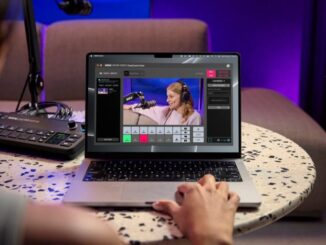
All in one video and audio production console from RØDE

RØDE has announced a groundbreaking production console with state-of-the-art video switching, production and recording capabilities and a complete professional audio studio.Just as the RØDECaster Pro revolutionized the podcasting landscape, the RØDECaster Video does the same for video production for content creators. With a feature set not found in any video switcher or audio mixer alone, the RØDECaster Video offers flexibility, control and portability for creators at home, to producers of large-scale video productions and events.Key Features of the RØDECaster Video:• High-performance octa-core CPU with a next-generation video engine, built from the ground up, allows for an innovative scene-based architecture that makes it super simple to create, configure and switch between complex multi-source layouts• Four HDMI inputs and two flexible USB-C inputs allow for connecting and switching between six video sources simultaneously, including USB webcams• Two studio-grade Neutrik® combo jacks with ultra-low-noise, high-gain Revolution Preamps™ for capturing pristine audio from XLR microphones, instruments and other audio equipment• Dual internal wireless receivers for connecting RØDE Series IV wireless microphones such as the Wireless PRO,Wireless ME and Wireless GO II• Powerful APHEX® audio processing, including an EQ, compressor, noise gate, high-pass filter, de-esser and the legendary Aural Exciter™, Big Bottom™ and Compellor™ effects• Automatic green screen or blue screen for effortlessly replacing backgrounds and using video sources in scenes• Innovative “Inspect” feature for quick-and-easy preview and configuration of any input or scene• Intelligent audio-based auto-switching for seamless hands-free switching between video sources andscenes, perfect for solo creators and shows without producers• Stream directly to all major platforms via Wi-Fi, Ethernet or USB and record directly to an external USB storage device, including multitrack and isolated (ISO) recording for complete post-editing flexibility• Remote control, user-assignable graphics and media, custom scene building, audio mixing and effects, and other advanced configuration options via RØDE Central• Designed and made in RØDE’s state-of-the-art facilities in Sydney, AustraliaAt its core, the RØDECaster Video is a video switcher, featuring a next-generation video engine with dual-engine processing. It is also a complete audio production solution, giving you everything you need to create content that looks and sounds incredible. It ships globally from Octoberand costs US$1,199. You can find more details here. […]