
ASIA

ABC wants more funding for Pacific broadcasts

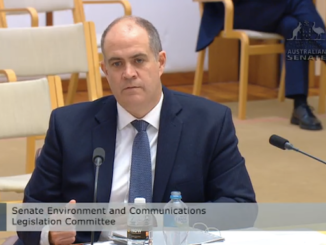
ABC managing director David Anderson told a Senate Committee hearing last night that public broadcasters in the Pacific have raised concerns about Chinese government pressure to carry state-owned news content.The ABC is lobbying to expand its operations in the Pacific and play a greater “soft diplomacy” role, as China increases its influence in the region. Across the Pacific there are many infrastructure projects funded by China that give it leverage in many areas, including broadcasting.The national broadcaster ended its shortwave Radio Australia transmissions in 2017 under managing director Michelle Guthrie, amidst warnings that shortwave radio was still important and that other countries would extend their influence in the Pacific in the absence of ABC Radio Australia signals on shortwave. In 2018, China extended its shortwave broadcasts into the region on the vacated ABC frequencies.“For the ABC to have an expanded presence there is important, particularly with concerns, frankly, over the Chinese government,” Anderson told the Senate Committee. “The single biggest piece of information that comes back to us from them is concern over the pressure the Chinese government put on them to carry content to broadcast through the Pacific.”The ABC also previously broadcast tv news bulletins into 46 nations including Indonesia and Papua New Guinea through the DFAT funded Australia TV Network, which was closed in 2014 after federal budget cuts. Chinese President Xi Jinping has expanded the state-owned China Global Television Network in recent years, to “make the voice of China heard.”The ABC continues to broadcast in the Pacific region, but at a smaller scale than in previous years.The ABC is currently lobbying the federal government for an additional $12 million to support the expansion of broadcast services to the region again.In his opening statement to the Senate Estimates Committee, David Anderson also outlined the success of the national broadcaster in several areas:“The ABC is the leading Australian radio network with the highest reach and share of listening.“ABC News finished 2021 as the number one digital news brand in Australia with more than 63% of Australians connected with ABC News platforms.“ABC iview was the number one Broadcast Video on Demand Service.“Importantly, 78% of Australians trusted the information provided by the ABC, which is significantly higher than all other media institutions and information providers… In its 90th year the ABC is more relevant to Australians than ever…” […]

ASIA

Latest research confirms DAB+ radio as standard in new cars across Europe

DAB+ radio came as standard in 95% of new cars sold in key European markets in 2021, according to figures released by WorldDAB.These results reflect the implementation into national legislatures of the European Electronic Communications Code (EECC) which, from December 2020, requires all new car radios sold in the EU to be capable of receiving digital terrestrial radio.These figures reinforce the findings of the recent Car Buyers Survey* by Edison Research which found that 90% of survey respondents say a broadcast radio tuner should be standard equipment in every car.Several new EU countries surveyed for the first time are already on a par with more established DAB+ markets and were found to have a high percentage of new cars sold with DAB+ fitted standard notably:
Austria:                  94% of new cars sold in 2021 have DAB+ as standard
Czech Republic:    93% of new cars sold in 2021 have DAB+ as standard
Poland:                  92% of new cars sold in 2021 have DAB+ as standard
Spain:                    91% of new cars sold in 2021 have DAB+ as standard
Patrick Hannon, President of WorldDAB, said: “Across Europe, new cars are coming with DAB+ fitted as standard. For broadcasters and listeners, there is a rapidly growing installed base of cars with DAB+. This applies to established digital radio markets, such as Germany, Italy and the UK, and to countries at earlier stages of development, such as Czech Republic, Poland and Spain. It is clear that DAB+ is the future of broadcast radio in Europe.”Key findings of the report:DAB+ is now in 95% of new cars in key European markets, driven by the impact of the European Electronic Communications Code which came into force end 2020, as well as the expansion of DAB+ in key markets such as Germany, France and Switzerland where preparations are ongoing to switch off FM in 2024.13 of the top 15 car sales markets in Europe now have over 90% of new cars sold with DAB+:
Italy, Norway, Switzerland, UK and Belgium – all have 98-100% of new cars with DAB+
Netherlands 95%
Austria is on a par with Germany and Denmark – all at 94%
Czech Republic 93%
Poland 92%, Spain 91% and France 90%
* Download the full report – Edison Car Buyers Survey […]

ASIA

86 radio stations shut down in Afghanistan

As the rest of the world marked #WorldRadioDay on February 13, Afghanistan mourned the loss of as 86 radio stations which have halted operations over the past six months since the Taliban took control of the country.Radio in Afghanistan began in the era of the former Afghan King Amanullah Khan in 1926. The first radio station was named Radio Kabul and broadcast in Kabul.Although the media has technologically developed in a variety of ways, radio still remains one of the main sources of information in the country.“We have a lot of memories from the radio. There was a time when restrictions were imposed on listening to the radio. When we were listening to the radio, we would task one individual to keep a lookout; we were listening to it in secret,” said Mangal, a resident of Wardak, while speaking to Tolo News.Current financial and political issues are the main reasons for the collapse of the Afghan media and the recent political change following the fall of the republican government has severely affected the country’s radio sector.Based on the statistics, over 300 different kinds of media organizations have been closed since the Taliban swept into power in August.“Around 70 per cent of radio stations are closed in the country. The reasons are economic challenges and broadcasting programs–in the current situation. On the other hand, the government insists on collecting taxes from radio stations,” Shafiullah Azizi, head of the Zamzama radio stations told Tolo News.“Our findings show that if the international community doesn’t provide financial support to the media, many of these radio stations will be closed within the next six months–this shows a collapse of the media in the country,” said Hojatullah Mujadidi, head of the Afghan Independent Journalist Association. […]

ASIA

#WorldRadioDay: PBC DG says radio ‘most effective medium’ during natural calamities

In his message on World Radio Day (WRD), the Director General of Pakistan Broadcasting Corporation (PBC), Muhammad Asim Khichi, said radio is the most effective and popular medium in dissemination of information during catastrophes and natural calamities.He said radio had vast outreach even in the time of modern technology and in the presence of other modes of communication.Khichi said Radio Pakistan adhered to the theme of this year’s World Radio Day, “Radio and Trust” and was known for broadcasting authentic and credible news. It received hundreds of emails and phone calls from the public about its content, which showed people’s trust in Radio Pakistan.Highlighting its expanding coverage, he said all transmitters are being transformed from analogue to digital, which will not only increase its outreach, but also improve voice quality. This will expand its coverage area to Far-East, Central Asia, and the Middle Eastern regions.He said in Radio Pakistan was livestreaming its transmissions, which could be accessed on social media. It has also started podcast service in 15 different categories, which could be heardon Radio Pakistan’s website. […]

ASIA

#WorldRadioDay: Saudi Arabia launches its first news radio station

The Saudi Broadcasting Authority (SBA) launched the country’s first news radio station to mark World Radio Day on February 13.Al-Ekhbariya Radio is a radio branch of the country’s state-owned Al-Ekhbariya TV channel. The SBA wants to expand focus on national news content through the station.The transmission will initially be available in the capital Riyadh, the Red Sea city of Jeddah and Dammam in the eastern region.The signal frequency numbers are Riyadh – 93.00, Jeddah- 107.7 and Dammam – 99.00.Broadcast time will be from 7 to 10 in the morning, from 12 to 3 in the afternoon – which will feature local political coverage, and in the evening from 6 to 9 pmWith a a network of 85 correspondents, it will offer updated bulletins, news briefs and stories covering a variety of societal issues and important international developments.Ahmed Al-Dawwari, editor-in-chief of Al-Ekhbariya Radio, said it will have 80 percent local content and 20 percent Arab and international content.According to Mohammed Al-Harithi, SBA CEO, the launch is part of the authority’s strategy toward distributing media discourse across all platforms and shifting toward specialized media to meet the needs of segments of Saudi society.He added that the interest in launching the station comes as the Kingdom witnesses rapid changes at all levels, creating an urgent need to provide new political and economic information to the public.Station director Mubarak Al-Ati told the Al-Ekhbariya TV “Today” program that the station is part of the kingdom’s Vision 2030 plans to build a more diverse and sustainable economy along with a vibrant society.“Launching the station is in the interest of the Saudi media renaissance to keep pace with the developments the kingdom is undergoing at all levels. Saudi media will continue to leap and advance in service of the kingdom’s leadership and people,” he said. […]

ASIA

Voice of Vietnam celebrates #WorldRadioDay

Radio Voice of Vietnam (VOV) held a ceremony on February 11 to celebrate the 11th edition of World Radio Day (WRD), under the theme “Radio and Trust“, with the participation of VOV leaders, heads of functional departments, and dozens of local radio and television stations nationwide.As part of his address at the ceremony, Christian Manhart, UNESCO Representative in Vietnam, said that with this year’s WRD theme, UNESCO wishes to affirm the public’s trust in radio as a popular, high-quality, objective, and reliable means of communication. It also aims to promote attention to audiences, especially those who are disadvantaged in society, whilst finally it remains essential to promote the application of digital technology and modern broadcasting methods. This should be done to competently complete the task of information and propaganda with confidence to survive.Whilst VOV has successfully carried out its mission for peace in the past, in the modern era, we believe that VOV will continue to overcome new challenges and successfully complete its mission. In line with this, UNESCO remains ready to accompany VOV in this journey, emphasized Manhart.According to Ngo Minh Hien, Vice President of VOV, for nearly 10 years, the broadcaster has consistently launched a range of activities to celebrate World Radio Day solemnly, with a view to clearly affirming the role of radio in today’s society, especially amid the COVID-19 pandemic impacting all aspects of social life.The celebration therefore creates a forum for colleagues and journalists working as broadcasters of VOV, as well as the national radio industry, provincial radio and television stations to share experiences and promote the development of radio in an era of information explosion.“In the age of information explosion, the most important role of radio is to establish a reliable source of information. That’s also why this year UNESCO has adopted the theme of World Radio Day as ‘Radio and Trust’. Today’s event serves as a forum for broadcasters across the country to share experience, find new directions for radio, and affirm the role of radio as a guide for information in society which is approached by the most people,” affirmed Hien.Building on more than a century of history, radio remains one of the most trusted and widely used forms of media. Throughout the years, radio has provided quick and affordable access to information in real time, in addition to professional coverage about matters of public interest, as well as guaranteed distance education and entertainment. Bridging the gap between “traditional” and state-of-the art technologies, radio now offers a variety of content through different devices and formats, such as podcasts and multimedia websites.“Radio still maintains a strong foothold to connect the community, promote information exchange in the context of many new media methods appearing. At present, media organisations are advocating for strong innovation of new forms of media in order to increase the effectiveness and attractiveness of radio and catch up with the common development trend of world media,” the VOV Vice President added.Tim Rowel, General Manager of Piano in APAC region shared ideas on how international broadcasters generate new funding and increase revenue on subscription platforms.Radioinfo Asia’s Steve Ahern, who is also Head of the ABU Media Academy, shared his ideas on the role and future of radio in the world. He said that while audience consumption patterns show that the number of households with radio sets is decreasing, and youth do not listen to radio sets, but they do listen to radio through mobile apps, streaming and smart speakers, which gives radio an edge over competitors. Radio is still personal, trusted and a source of company. It still stimulates the imagination as it is the only media without a screen. It is anonymous, has a robust transmission infrastructure and is essential in emergencies. He also emphasized that in these days of fake news and disinformation, trust and credibility are essential for audience retention. Brodacasters should make sure that their audience trusts them more than fake social media accounts. […]