ASIA

RCS Asia Pacific VP presents ‘Radio in the Cloud’ at ABU workshop

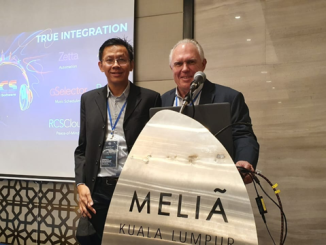
RCS AsiaPac Vice President, Keith Williams (right) spoke on the opening day of the Asia Pacific Broadcasting Union workshop in Malaysia along with RCS Malaysia Manager Micheal Low presenting ‘Radio in the Cloud’ talking about Zetta Cloud and Revma streaming as part of the three-day event held at the Melia Hotel in Kuala LumpurThe workshop was titled Cloud Technologies for Media Services and drew over 60 members from as far as India, Pakistan, Thailand, Papua New Guinea and a big contingent from Malaysia including Radio Television Malaysia (RTM).This workshop focused on the applications of cloud-based technologies and platforms in the media environment being deployed by broadcasters for production, distribution, storage and delivery of their services.The sessions looked at how media operators can leverage cloud technologies and what areas would be the most beneficial to implement both in production and distribution. The sessions discussed various topics including cloud technologies, media workflows, system integration, distribution, media asset management and playout. […]

ASIA

Digital radio set to change how Indians consume entertainment, news

As the digital consumption of entertainment and news grow multifold in India, digital radio is set to change the entire creator economy landscape, giving millions of people options to discover music and live programming in a brand new way, Ashruf El Dinary, SVP, Digital Platform at US-based Xperi Corporations, said on Saturday.In a mobile-first country with more than 500 million smartphone users, music and content streaming has seen a tremendous rise on hand-held devices in India.TV has also seen the phenomenal rise of OTT and FM radio 2.0 is the way forward to tap millennials and Gen Z listeners.“Radio is still analog in most parts of the country. HD Radio broadcasting allows broadcasters to compete with the pure play digital platforms and meet consumer expectations for a media rich experience. The technology will allow expansion of media voices and content in a cost-effective broadcast,” El Dinary told IANS.HD Radio by Xperi Corporations is currently available from more than 40 manufacturers across 200 passenger vehicle models in more than 75 million vehicles.It also supports both Android Auto and Apple CarPlay. The HD Radio broadcasting has been successfully deployed across many countries, including the US, Canada, Mexico, Philippines and Romania.According to El Dinary, their talks with the Indian government have been fruitful so far in bringing the digital radio technology to the country.The All India Radio (AIR) recently submitted its report to Prasar Bharati about the digital radio technology trials conducted recently, and the further testing is on.

“Whenever the decision is made in this regard, the industry will begin laying over the infrastructure needed for digital radio expansion,” he said.HD Radio did a trial with AIR and demonstrated its tech feasibility, signal quality and more.“We completed trials in 2021 and reports have been generated in multiple ways. Our tech has been very mature as we have developed an entire ecosystem around digital radio in many countries,” El Dinary said.The HD Radio system leverages “whitespace” between allotted transmission frequencies to transmit additional audio channels and programming on the same broadcast infrastructure and antenna system.The result is a hybrid digital/analog signal within a broadcaster’s existing FM band. […]

ASIA

National Broadcasting Day commemorates India’s first ever radio broadcast

Every year on July 23, India celebrates National Broadcasting Day to commemorate the first radio broadcast in India from the Bombay Station under the Indian Broadcasting Company in 1927.Radio broadcasting services started in India during British rule in 1923 under the initiative of the Radio Club of Bombay. In 1927, the Indian Broadcasting Company (IBC) was made a private entity and granted permission to operate two radio stations. IBC went into liquidation on 1 March 1930, following which the government took over the broadcasting facilities and started the Indian State Broadcasting Service (ISBS) on 1 April 1930 on an experimental basis for two years.Eventually in June 1936, it became All India Radio.  At the time of independence from the British Raj, there were a total of six radio stations – Delhi, Calcutta, Madras, Bombay, Tiruchirapalli, and Lucknow. FM broadcasting started later, almost 30 years later on 23 July 1977 in Chennai.Since 1956, All India Radio (AIR) has been known as Akashvani. In terms of the number of languages broadcasted through it, AIR is the world’s largest radio network.AIR now comprises 420 stations across the country, reaching nearly 92% of the area and 99% of the total population.  AIR is owned by Prasar Bharti, which is a statutory autonomous body set up by an Act of parliament and besides AIR, it comprises Doordarshan Television Network and Prasar Bharati News Services. […]

ASIA

DRM announces its IBC Hybrid Events

Three diverse and complimentary DRM events (live and virtual) at the IBC 2022 show, to be held in Amsterdam from September 9 to 12, will illustrate this year’s overarching theme “DRM for FM and AM – The Radio Platform for All”.The first pre-IBC DRM virtual event is scheduled for September 6 and its theme will be “DRM – A Platform for All”. This will be a chance for all those interested in the performance or the manufacturing of DRM to get a full update from the comfort of their office or home or on the move. The event will be an exciting showcase of the practical advances of DRM during 2021 and2022 with a well-illustrated, and global view of the DRM standard and its latest receiver developments and projects.For those who will be in person in the Netherlands, DRM has organised on September 10 a “Meet and Greet” with the DRM members and specialists at the Fraunhofer IIS stand. At this informal get-together participants will be able to share news and information face to face and connect or re-connect to the DRM family.This will also be the preface of the main DRM event in the afternoon of the same day, September 10, at the Nautel stand. “DRM Is Ready for FM” is an event co-hosted with Nautel which will bring the latest on the India DRM for FM trial, more information on the multi-configuration in DRM for FM, new receiver solutions and transmitter improvements. It will be a useful DRM overview and a chance to network in the very relaxed atmosphere of the friendly Nautel space.According to the DRM chairman, Ruxandra Obreja: “This will be an excellent opportunity to attend a series of great DRM sessions, blending a virtual event with face-to-face ones. Each will be unique and different so that together they offer enough information on their own or are experienced as stages in a journey of discovery which demonstrates that DRM for both for FM and AM is the radio platform of the future. DRM is more attractive and in tune with the needs of the world than ever before, with its energy and spectrum cost savings and some extra features and possibilities, like delivering education and emergency warnings.” […]

ASIA

Problem Solving – The First Step is the Most Important

Content from BPR,To effectively manage and operate any successful organization, leaders must guide their team members and develop problem-solving techniques.The best minds in business management all agree that problem solving should be structured. By following steps, we can more clearly understand what problem it is we’re solving, what are the components of the problem that we’re solving, which components are the most important ones for us to pay attention to, which analytical techniques we should apply to those and how we can synthesize what we’ve learned back into a compelling story.There are different Problem-Solving Processes…. some with four steps, others with six or seven.But the ONE step they all have in common is the FIRST step….and that is…..What problem are we trying to solve?It is surprising how often people jump past this step and make a bunch of assumptions. The most powerful thing is to step back and ask the basic question…. “What are we trying to solve?”You need to be sure that you’re dealing with the real problem…. not its symptoms. For example, if performance in a department is substandard, one might think that the problem lies with the individuals themselves. However, the real issue might be a general lack of training or an unreasonable workload across the team.

When you have been in as many strategy and planning meetings as I have over the years you realise that those in the meeting with you often have completely different views of the very problem they’re there to solve.Our problem is the Morning Show-they’re not that funny, the music is off track, lack of marketing, too much inventory, our competitors aren’t that good but they’re out rating us (??!!) ……yes we’ve heard them all.The Morning Show may be lacking in entertainment value, but is that because of the talent or poor direction from the programming team? The music may be off track but is that the fault of the music director or the fact that the music vision hasn’t be effectively explained to them… or is it because of flawed research?Too often people run off with half of the idea about what the problem is and start collecting data and start thinking about ways to solve that problem, only to discover that they’ve gone off half-cocked.To define the problem you’re trying to solve:
Separate fact from opinion
Remove emotion from the process
Specify underlying causes
Consult each team involved in the problem-solving process for information
Avoid trying to solve the problem without data
State the problem specifically and unequivocally. Avoid vague language.
In the world of medicine, doctors are trained to understand the difference between treating the symptoms and curing the condition. A broken wrist, for example, really hurts…. but painkillers will only take away the symptoms; you’ll need a different treatment to help your bones heal properly and cure the underlying problem.The same applies if you’ve got a problem at your radio station. If you only treat the symptoms – what you see on the surface – the problem will almost certainly return, and need fixing over and over again.Determine the real problem and fix that!By David Kidd, BPR […]

ASIA

Challenges to broadcasters in the Asia Pacific region: ABU Rai Days

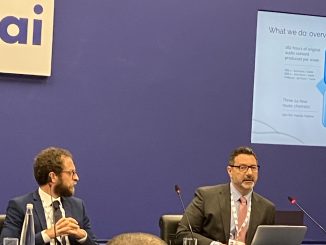
On day two of the ABU-Rai Days Conference, Steve Ahern, Head of the ABU Media Academy, gave an overview of the challenges to transformation in the Asia Pacific region.Steve began by highlighting the positive changes the pandemic brought: speedier digitisation, smarter work practices and newer delivery methods.However he acknowledged the purpose of the session was to highlight the challenges in such a varied region. Internal challenges included:
Lack of money, most Asian PSB take advertising
Unreliable electric power and internet unreliability, difficult for remote studios during pandemic
Transmission issues – sand, water, jamming, disasters
Old studios, new ways of production not yet achieved
Organisational approach to change – structures
Regulatory restrictions – NHK forbidden to be online
Staff mindset, unions, outdated promotion practices
Outdated training styles – didactic not point of need
While the external challenges for the region included:
Internet and phone access/expense
Not understanding audience attitudes – no longer trust, don’t want adversarial bad news, news I can use rather than news I should have
Different generational habits and expectations
Cyber attacks
Misinformation/Disinformation
Advertising agency reprioritisation to digital platforms
Internationalisation of content, less protection of culture
Increased competition: Podcasting and VOD
Unlike Europe there is no region wide uniting body so regulation and trade require bilateral relationships
Steve used two polar examples to illustrate some of these changes. The first China, where recent research by McKinsey showed that Chinese youth, due to the current financial boom had lots of money, were spending not saving but creating a demand for luxuries, including travel and media on demand. The report found that Chinese youth want:
Spontaneity
Personalisation
Ease of use
Connectivity
Sustainability
Brand power
Privacy (without giving up the other benefits)
The study concluded that, “In just three more years Gen z will make up a quarter of the Asia-Pacific region’s population. By 2030, half of all transactions in the world will take place in Asia.”The second example was Afghanistan, where the face of broadcasting has changed recently as follows:
Many stations closed or reformatted
Entertainment and music programming more restricted
Intimidation and killings of journalists
Staff and Boards replaced, controlled
Fewer women on air and on screens
Advertisers cannot pay their bills (including government)

In another session, Davide Schiappapietra, the Head of Language Content at SBS Australia, discussed ‘creating vibrant digital communities.’He said: “Public broadcaster SBS in Australia is about promoting social cohesion, how we identify with new communities through connecting on similar interests.” We are now using Augmented Reality to tell stories of people we’re talking too, convert their content to podcast feeds, music channels, feedback gathered regularly, he said.“We are reaching out on socials and still trying to understand TikTok…“What matters is the content this can then be on different platforms… we are platform agnostic… Shaping content on where the audience is i.e. WeeChat.” […]