ASIA

The 3rd edition of Radiodays Asia has opened in KL: #RDA22

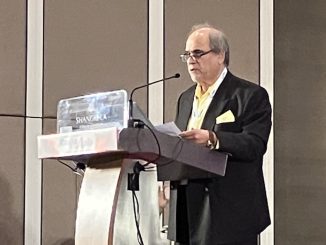
Anders Held (pictured) Project Director and founder of Radiodays has opened Radiodays Asia, welcoming around 300 attendees from 30 different countries who are attending this year.This is the 3rd edition of Radiodays Asia and once again it is a hybrid event with a number of participants attending on-line as well as those who have opted to attend in person.Speakers during the first session today have included the CEO Astra Radio Malaysia, Kenny Ong who presented the keynote address Sound of the Future.Kenny says that throughout Asia in particular, radio stations are just coming to grips with the audio battlefield that now exists, and those that are just coming into radio are finding the challenge very daunting.He says that McDonalds may not make the best hamburger in the world, they sell the most burgers in the world which poses the question about how important the product really is for success.Their success lies in the 2 C’s,
Consistency: They promise their burgers taste the same everywhere in the world
Convenience: They have the most 24 hours outlets in the world, were the first to begin serving breakfast at 3.00am in the middle of nowhere, they are ones with the most playgrounds, have the most drive throughs and the most efficient drive through in the world.
He says really knowing and understanding a stations audience is a priority.Businesses like Starbucks are successful because they understand what their customers want, and not because they serve the best coffee, bur because they are “…the best halfway house in the world, where I can get free Wi-Fi and free electricity.”Radio stations have to create the “why” for their listeners and also understand why their listeners tune in.Kenny also urged radio stations to take a close look at the technology that is coming out of China. […]

ASIA

Connecting with all your listeners #RadioAsia2022

Community broadcasters from two countries demonstrated how ingenuity, creativity and smart technology keeps them connected and engaged with remote, indigenous, and hard to reach listeners in a showcase session titled ‘Connecting with ALL your listeners’ at RadioAsia.Jon Bisset, Chief Executive Officer, Community Broadcasting Association of Australia (CBAA) said the purpose of their organization is to make community radio stations stronger and more successful by providing support and resources, products and services that deliver economies of scale, communication and collective representation and networking and peer-to-peer support.The community broadcasting sector in Australia is powered by 22,000 volunteers and 900 employees, 99 percent of whom find value in working in community radio.He discussed the importance of community radio news and info as a crucial service for undeserved audiences, which are under-represented by mainstream media and how in regional areas community radio provides an essential connection in times of crisis.He gave an example of Braidwood FM, a community radio in New South Wales, where during the bushfires, “there were people that had the radio on 24 hours a day every day just to hear what was happening. There was no on ground local coverage from the ABC here.”Speaking about going beyond on-air broadcasts to reach local audiences, he said: “We want to keep community radio relevant in the next five to ten years. Without integration with other platforms, it is not possible.”Bhumiraj Chapagain, Audit Committee Coordinator, Association of Community Radio Broadcasters (ACORAB), Nepal, discussed various way in which they tried to reach local communities during the Covid-19 pandemic.They created an audio center which allowed listeners to contact the through IVR, took audio messages from audience as well as from member stations to disseminate information and updates.“We are trying to receive voices of disadvantaged people from remote areas and take them to the authorities,” he said.He also discussed plans to involve more girls and women in community radio journalism as ACORAB aims to create 35,000 volunteer journalists over the next five years. […]

ASIA

Show me the money! #RadioAsia2022

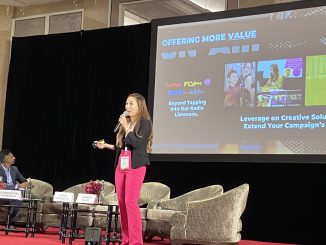
On the second day of the ongoing ABU RadioAsia conference, a showcase presentation titled ‘Show me the money!’ discussed if radio stations have really made money out of their social platforms.The first presentation about this was made by Vickneswaran Kajindran, Head of Business Development, Media Prima Omnia and Nadiah Sanchez Yu Strategy Planner, RMG.Yu discussed how monetization and an improved product offering go hand in hand in offering more value.“Going beyond tapping into radio listeners involves leveraging on creative solutions to extend a campaign’s reach,” she saidShe discussed various case studies like the launch of Disney+ Hotstar in Malaysia, for which FlyFM, HotFm, 8FM & BuletinFM  all became Disney+ Hotstar FM leading up the OTT launch starting with teasers, followed by a countdown and the final launch, which saw 26.4 million impressions and their site crashed due to an overwhelming response.FlyFM, HotFM and 8FM hosted an online contest for FoodPanda, a food delivery service which had a reach of 7.2 million.In another case study about Central Sugar Refinery, key announcers from FlyFM and HotFM interviewed 30 frontliners over 30 days on how they cope with the pandemic. The campaign reached 71. Million people, overachieving its target by 195 percent.Kajindran said: “From a client servicing perspective, with these kind of results, it’s easier to go to clients and pitch more ideas involving social media.”Richard Phelps, Senior Digital Producer, All in Media spoke about leveraging Station Apps to generate revenue.According to him, “Radio is an amplifying platform. It works well when integrated with social media.”A great app should balance your business objectives, create simplification for users, focus on your strengths, grow consumption, only collect meaningful audience data and give opportunities to monetise content.He discussed various content monetizing opportunities on station apps, including display advertising, digital ad insertion, ad replacement, vouchers, rewards, in app messaging or push notifications and pop-up sponsored content. […]

ASIA

The smartest things you’ve never seen #RadioAsia2022

On the second day of the ongoing ABU RadioAsia conference, Anna Dixon, Senior Service Designer, ABC Innovations Lab gave a showcase presentation titled ‘The smartest things you’ve never seen’.She discussed an exciting new project at the ABC Innovations Lab which started with the thought of being able to choose some articles from the ABC website and have them read to you as you drive into work or head out for a walk.The pilot objectives were to develop a custom ABC synthetic voice to a level capable of reading out articles, evaluate voice capabilities by comparing a custom ABC branded voice and an off the shelf voice, apply synthetic voice in a text-to-speech trial to understand audience appetite and deliver insights into potential accessibility benefits as well as translation capabilities.Dixon took the audience through the steps involved in developing this voice, giving a history of voice synthesis, which kicked off in the 70s with format synthesis, followed by a technique called concatenative synthesis, where recorded chunks of sound are reassembled in different ways and through to the modern voices of our smart home assistants and phones today produced by a few big tech players.She discussed developing a voice using neural networks – a series of algorithms that endeavours to recognise underlying relationships in a set of data through a process that mimics the way the human brain operates.She spoke about taking samples of three of their presenters and how they ended up developing an ABC virtual voice in partnership with Microsoft and applied it in a ‘text-to-speech’ trial at the ABC News website and app.Discussing the viability of the pilot, Dixon said: “Is it practical or useless? We try to learn via tracking analytics, a survey that is attached to the feature, and some specialized usability testing with accessibility experts.” […]

ASIA

ABU’s Radio Asia conference opens in Kuala Lumpur

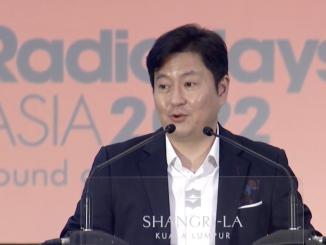
ABU Secretary General Dr Javad Mottaghi welcomed delegates to the first face to face ABU radio conference in three years.“Radio has been important in helping the public to survive during the covid crises… it is a trusted source of information and a way of connecting people when they had to be apart. “Broadcasters have been able to cope with covid and continue serving the audience during this challenging time… we have all been affected but we have been able to cope with the disaster. “The ABU also adapted very quickly to deliver our services online during these challenging times,” he said.Radiodays founder Anders Held talked about the partner conference RadioDays that follows the ABU’s Radio Asia conference.“RadioDays was originally founded in Europe and has grown into the biggest radio and audio conference in the world…  “The challenges are similar for radio industries all over the world, it has been shaken up and we have to learn and look forward to the future. We value the collaboration with ABU and our ability to bring the best speakers in the world to these conferences.”A top level experts round table began the day’s sessions.Dr Hendasmo, RRI’s President Director has confidence in the future of radio because it can enhance culture. “Our social function is to unite our country… we all face the same challenges with new media platform disruptions, but it is a part of life.”Traditional radio listening in Indonesia has decreased by 37 percentage points in recent years, from 50% to 13%, according to the 2018 census, while internet usage has dramatically increased.  Time spent listening to broadcast radio sets has also decreased. So RRI has increased its services on new platforms to continue to deliver its mission. “Radio can survive by delivering its content in new ways and cultivating audience interaction.”David Hua, the Director of Language and Audience Services at SBS said there are similar sobering statistics in most countries, but it comes down to how we define the word ‘radio.’ David talked about the connection people have to radio. He told the story of an old man who had many radio sets and when he died his wife wanted to give them to others in the family, when she turned each one of them on, they were all tuned to SBS Radio. “People are connected to radio in different ways, linear broadcast radio is still important to many, especially those who cannot connect via internet and data, while other types of new radio content connect in different ways.”Sanjiv Dosajh, Assistant Director General of Programmes at All India Radio talked about the huge diversity of languages, geographies and cultures in India. “Radio is alive in India, during the pandemic radio came to the people’s rescue… we had talkback with doctors who gave information about covid. When people called we asked them, how are you listening… 50% of them said they were listening to live broadcasts on a traditional radio set. “The challenge is to keep reaching the younger population too, they are shifting to web radio and social media platforms so we are developing new programs on new platforms for them. We have a talent competition to find new young radio presenters and we put them on air as RJs… it is another way we are keeping radio alive and reaching new age groups.”Dan Santa, the Director of International Relations at Radio Romania compared his small country of 20 million to the huge populations in the countries of the other speakers, saying that there are common issues no matter what the country and population size. “Remember when we thought that watches or books would be replaced by phones and ebooks, but this has not happened. The Swiss watch companies are still there, so are books… “Radio has an important public mission and as long as we continue to fulfil our mission there will be a well defined future for radio.” Keith Williams, Vice President of RCS Asia Pacific said “radio has succeeded to this point because of the content, nothing has changed about that, it is just that there are different means of delivery. Radio people are great at creating content. If I hear my radio station in a car or at the mall we are winning, it makes no difference how that content is getting to those locations.”  […]

ASIA

What are our clients saying to themselves?

Selling Radio Direct with Pat BrysonDo you remember the movie, “What Women Want”? Mel Gibson got hit by lightening and began reading women’s minds. That came in quite handy in promoting products to them. Ever wish you could read your clients’ minds? We can come close by studying the internal dialogue clients are having when we approach them at various stages of the sales process. Understanding this will give us the ability to answer their “Why?” This, in turn, will increase our effectiveness.Our first step is to get the appointment. Our prospect is thinking:“Do I want to see the salesperson?”“Do I have the time?”“What do they want?”“Radio didn’t work last time.”“Do I want to spend the money?”If we can’t give them a good answer to these questions, we don’t even get in the door. And that’s why we use our personal 30 second commercial (see previous newsletters or give me a call and I’ll walk you through it.)Next the client is deciding if they want to work with you. This usually happens when you are in a client needs analysis.“Is this salesperson credible?”“Do they know what they are doing?”“Can I trust the company?”“Can they help me?”How we comport ourselves, the questions we ask, the interest we show in their business contributes to positive or negative answers to these questions.The dialogue continues in the CNA:“Do I have the time?”“Do I trust them enough to share my problems?”“Will answering these questions help to solve my problems?”“Is this worth my time?”We should talk about the business of the business before we talk about the marketing of the business. This will insure a “Yes” answer to these questions.We bring back a proposal. What are they thinking now?“Does this fit my needs?”“How does this compare to other options?”“Is this what I want?”“Is there some commonality here?”If you have prepared a customized campaign based on the needs and goals you uncovered in the Phase Two needs analysis, the answer should be “Yes”. If you took a package off the shelf, it more than likely will be “No”.During the presentation the client has other considerations:“What is the cost?”“What is the value?”“Do I want to change what I’m doing now?”“Do I want to look at other options?”“Do I believe the reward is greater than the risk?”Our job is to reduce risk and stack value. One of the best ways to do this is to tell great stories. The best salespeople are the best storytellers.Now to the decision:“Do I do it now?”“Later?”“Never?”“Can I justify doing this?”Have we made our case? Do we have an ROI page to justify the campaign?And after the sale:“Did all go as promised?”“Was I treated fairly?”“Will it work?”“How long will it take to see results?”“Was this a good decision?”“Will I recommend this to others?”We should manage our client’s expectations on how and when the campaign will produce results. And, we must take very good care of our clients moving forward. Make an agreement with them on how and when you will contact them. Exceed their expectations.The last time you made a significant purchase, I bet your internal dialogue was similar to this. The more we can understand and live in our client’s worlds, the better off all will be.Now, you didn’t even have to get hit by lightening to read minds.Happy Selling! […]