ASIA

Cool new tech at RadioDays Asia #RDA2022

Podnews proprietor James Cridland surveyed some of the new technology being used by radio broadcasters and podcasters in a session today at RadioDays Asia.SpoolerSpooler is a new CMS for publishing audio that gives creators flexibility to edit and re-edit podcasts quickly and easily, making timely updates feasible in a way never possible before. Spoken, text based, instantly updatable content is the key to Spooler’s offering.The technology is built on the creation of individual digital story modules that can be updated and effortlessly packaged together in a way that is seamless and adaptive, resulting in a finished product that sounds as polished as highly-produced podcasts which can take many hours to create and edit.AdoriAdori allow visuals to be added easily to audio podcasts, for publication on Youtube. “Youtube is the second largest search engine on the internet, it has lots of audio, but needs pictures to make it even better.”Cridland expects that YouTube will increase its emphasis on podcasts in the near future. About half of the content on Youtube is audio content. He urged broadcasters to think about adding pictures and text that can be displayed if people are ‘watching’ the audio on YouTube, and gave the example of True Crime Reporter’s podcast as an example of how this can be done.Adori intends to be usable for TikTok and other platforms in time.SquadcastSquadcast is a Zoom-like tool that records at the person’s own end, ensuring that the quality of each speaker is consistently high, rather than the variable quality that is common in Zoom. Once the recording is finished, audio at the guest’s end will automatically be uploaded to teh broadcaster’s studio computer.Veritone VoiceArtificial voice company Veritone Voice uses familiar voices from the station team to deliver other content when they are not there. For example the synthetically generated voices of the breakfast team are used out of hours to deliver overnight weather, and then the voice reminds people that the team will be on air soon, at 6am.Other technologies mentioned include:The syndicated music countdown show 10 most wanted uses a system developed by the host Gav Richards that allows localisation content to be easily added into the syndicated show.RCS cloud based radio stations allow broadcasters to instantly expand their radio station offerings, such as a range of Kids stations offered by one broadcaster to serve its young audience. […]

ASIA

For Ralph Van Dijk, it’s all about love: #RDA22

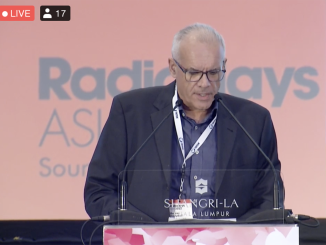
Founder and Executive Creative Director, Eardrum, Ralph Van Dijk (pictured below), addressed Radiodays Asia, speaking about Love, the emotion that trumps all others, with the most successful brands those that are loved and shared at warp speed.He says consumers want to be engaged, entertained, and inspired, and the fastest way to a consumer’s heart is through their ears, but for too long “radio has been associated with one-night flings. It’s been the medium that shows up for one night, shouts a few things at you, and the advertising disappears after one night.” These ads have often tried too hard and are “…the audio equivalent of the cheap suit and too much cologne.” Ralph says audios lack of pictures gives it a massive advantage and “…advertisers on audio get to be with listeners all day, every day, at home, while they are on the move, in the most intimate and one on one environment.“We need to help our advertisers create long term campaigns that form long term relationships with our listeners. And if we do, those advertisers will come back time after time to radio.” He says barking lists of prices and talking at listeners doesn’t work, “…because 75% of consumers say they make their decisions based on emotions so if you can find a way to connect with your audience emotionally you are more than halfway to converting them into loyal customers.” […]

ASIA

The tussle for talent #RDA2022

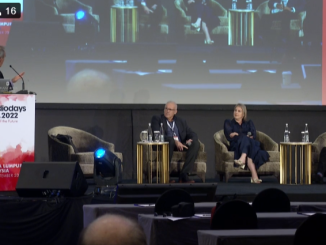
Talent recruitment has become harder due to increased competition from competitors poaching staff and social media providing a new avenue for people to build their personality profiles. There is now more competition for talent and wages. How are radio broadcasters coping and what strategies are they using to find and hold new talent? Steve Ahern, Head of ABU Media Academy led a panel discussion called ‘The Tussle for Talent’ with radio leaders to discover the extent of the problem and what they are doing about it.The panel included Duncan Campbell, Chief Content Officer, ARN, Australia, Amanda Lee, Content Director – Melbourne’s 101.9 The Fox, SCA, Australia and Abe Thomas, CEO, Big FM, India.Introducing the topic, Steve quoted the example of an anonymous employee who contacted Radio Today arguing for increased pay in an open letter to the industry. The reactions to it were polarized. Someone found it soul crushing to work really hard for perks which were few and far between and then hear that some people were earning obscene amounts of money, while someone else commented that if you don’t want to leave radio, you don’t need a six figure salary to “be comfortable”, learn what you can do with what you make.Steve then discussed comments from Malek Ali, Proprietor, BFM, Kuala Lumpur on what does it mean for retaining talent, now that people have other options. Is it a problem?Ali said: “Just the last few months, we have lost several people to other organisations seeking content creators. These are not media companies, just normal companies seeking content creator talent for their verticals. The only thing we can do is say it takes a team, not an individual, to create this great content, and then focus on our culture and environment to retain people. If an individual is motivated heavily by financial rewards and leave us, then we wish them well, but tell them to get back to us if anything changes.”Amanda said: “Yes, there’s a lot of other opportunities and not having to do the kind of hours we do in radio is a factor.”“You can make $40,000 a year with a YouTube channel as against $60,000 as a radio producer. You’ll stay in the business if you love it. It’s always been an issue,” said Duncan.Abe spoke of two new phenomena  he has noticed after the pandemic, when there were a lot of job cuts and it changed the way talent looks at work as they seek a better work-life balance. “Ghosting is when people just disappear after their first salary and become uncontactable. The other trend is ‘Quiet Quitting’, when people just do the bare basic minimum to keep their job, there is no effort to try to achieve anything more,” he said.“In an industry with a shallow talent pool, it is our responsibility to help them develop talent,” said Duncan. […]

ASIA

Best way to predict the future is to invent it yourself #RDA2022

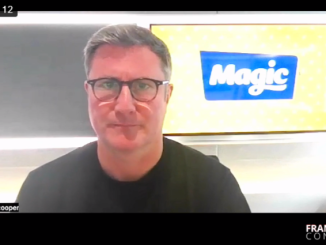
“Covid was a wake-up call, a shock to the system. Radio brought a sense of community, a sense of connection to the outside world. It could be the beginning of the golden age of radio in the 2020’s,” said Ben Cooper at a session titled ‘Reinventing Radio’ at Radiodays Asia 2022.Cooper is Chief Content and Music Officer, Bauer Media Audio, UK – Europe’s largest commercial radio group. He was introduced by Francis Currie, International Radio Consultant.The session discussed how you can successfully transform from a traditional radio company to a digital audio business.Cooper, who could not make it personally, was interviewed earlier by Currie and made a video appearance.He said that radio has been predicted to die many times – by TV, by video, by CDs, by MP3, by streaming, but it’s still around and growing.“Radio sleepwalked through the smartphone era, but is fighting back with the smart speaker era. This moment in time is the key to reinvent radio,” said Cooper.According to him, in order to reinvent a radio business, top content priorities should be 3A’s – Audience, Artists and Advertisers.“Commercial radio has been focused on getting a famous name for breakfast and following it up with a playlist for the rest of the day. We need to provide more content, as audiences are demanding more.”“For Artists, radio is a great way of telling audiences about music. Catalog music makes up 80 percent of music labels. Being useful to the music industry is important. Even more so for new music. Labels know how important radio is for introducing new music.”“Advertisers want a merger of content, advertising and marketing. Social media and video content allows us to be creative in new ways.”Summing up his presentation he said, “The best way to predict the future is to invent it yourself.” […]

ASIA

How to make social media work for podcasts #RDA2022

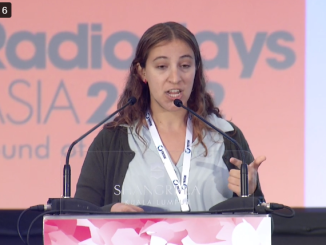
Arielle Nissenblatt, Founder, EarBuds Podcast Collective, USA, spoke about how to best use social media to help more people find your audio: and get closer to your audience at Radiodays Asia 2022.Nissenblatt, whose session was titled “Social Media – #winning for podcasting and audio”, listens to over 40 hours of audio content per week. She is a podcast industry futurist and believes in the power of audio to break down cultural barriers.She said the social media can be powerful, but one should use data and tracking to see how effective is it for your content. If it’s not working, let it be.She also stressed on regularity, saying: “you need to be active on social media so people know that you’re alive. If they see your content and share it, it means that it is valuable.”“A big mistake that podcasters make is that they follow only other podcasters. You need to follow and quote other influencers in your niche, who are talking about the same things as you.”She also discussed how not to use social media. Spamming your link, using only Apple podcasts link, changing your content’s appearance post to post, being everywhere all the time and irregularity should be avoided. […]

ASIA

Duncan Campbell on the ‘story art’ that is radio #RDA22

ARN’s Chief Content Officer, Duncan Campbell, has addressed Radiodays Asia, and talked about radio’s connections to its listeners.He says radio’s continued success and longevity is the result of powerful personal connections that listeners make through the unique personalities they listen to every day.Campbell says that even with a focus on new technologies that some claim are ‘radio killers’, it’s important to remind ourselves that radio is still incredibly strong and will evolve and adapt as it has since it was born.He says that for each person “…the reason for their connection can be different, and what’s interesting is that people can’t describe it easily either.  It’s a feeling or a sensation, or a psychological state…powerful emotions that are enduring. “Every day emotional connections are being formed or reinforced by radio personalities around the world …and these connections can be established one content line or over many days or weeks that we call story art.” […]