ASIA

India: TRAI seeks views on news on Radio

The Telecom Regulatory Authority of India (TRAI) has released a consultation paper seeking views on issues related to FM radio broadcasting.As of December 2018, there are more than 369 operational private radio stations in more than 101 cities and towns across India. The Government of India-owned All India Radio has about 450 FM stations covering 39% of the area and 52% of the population of India.The issues in the consultation paper include whether FM radio stations should be permitted to broadcast independent news bulletins.

FM radio operators are currently allowed to carry All India Radio (AIR) news bulletins in exactly the same format without any alterations. No other news and current affairs programmes are permitted.In its statement, TRAI said that industry bodies and players have made representations that FM radio stations must be allowed to broadcast news and current affairs just as it is allowed on private TV channels and digital platforms.It has also sought views on issues related to the annual license fee and license period for FM radio players. FM radio license holders are required to pay an annual license fee to the government at the rate of 4 per cent of the gross revenue of its FM radio channel for the financial year or 2.5 per cent of the NOTEF (Non-Refundable One Time Entry Fee) for the concerned city, whichever is higher.TRAI said that last May it received a reference from the Information and Broadcasting Ministry in May last year seeking recommendations on two issues – the removal of the linkage to the non-refundable one-time entry fee (NOTEF) in the formula for the annual fee as prescribed in the FM Phase III policy guidelines and recommendations on whether there is a need to extend the existing FM license period of 15 years by three years.It has also sought comments on whether it should be made mandatory for all mobile handsets sold in the country to have in-built FM radio transmitters, as industry players have said that with the introduction of 4G handsets, device manufacturers and operating systems are turning the FM tuners off.Written comments on the consultation paper are invited from the stakeholders by 9 March 2023. Counter comments, if any, may be submitted by 23 March 2023. […]

ASIA

Indian government cracks down on BBC after Modi documentary

A few weeks after the BBC released a documentary titles India: The Modi Question, which probed Indian Prime Minister Narendra Modi’s role in communal violence in Gujarat in 2002, when he was the state’s Chief Minister, its offices in India have been raided by the Income Tax authorities.On February 14, a team of Income Tax Officials landed at the broadcaster’s offices in New Delhi and Mumbai and seized all the employees’ computers and personal phones. While the tax department has not put out any official press release, several media organisations quoted “sources” to say that this was a “survey” which formed a part of a tax investigation.In a short statement, the BBC said it was “fully cooperating” with authorities, adding that it hoped to have the situation “resolved as soon as possible.”

While a senior advisor to the government told a local news channel that there was no connection between the documentary and the investigation, media watchdogs and rights groups have expressed fear that the raids are politically motivated.The documentary, which was not officially released in India, made its way to YouTube and other video streaming platforms. The government called it “a propaganda piece designed to push a particular discredited narrative” and days later, invoked special emergency powers to get social media platforms to block it completely.The ruling Bharatiya Janta Party’s spokesperson called the BBC “corrupt” and “rubbish” and that it should “respect Indian law.”In recent years, similar raids have targeted journalists and civil society organizations critical of the Indian government with criminal cases under India’s opaque terrorism and sedition laws, and allegations of financial misconduct and improper foreign funding that have been used to freeze bank accounts.The Press Club of India, in a statement, condemned the survey and said that it was, “part of a series of attacks on the media by the government agencies in recent times, especially against those sections of the media that the government perceives is hostile to it and critical of the ruling establishment.” It added that, “this latest instance appears to be a clear-cut case of vendetta, coming within weeks of a documentary aired by the BBC on the Gujarat riots.”The Editors Guild of India, in a statement, said: “This comes soon after the release of two documentaries by the BBC, on 2002 violence in Gujarat and the current status of the minorities in India … This is a trend that undermines constitutional democracy.” The Committee to Protect Journalists said: “Raiding the BBC’s India offices in the wake of a documentary criticizing Prime Minister Narendra Modi smacks of intimidation. Indian authorities have used tax investigations as a pretext to target critical news outlets before, and must cease harassing BBC employees immediately, in line with the values of freedom that should be espoused in the world’s largest democracy.”Reporters Without Borders tweeted: “The searches by the tax authorities of the offices of BBC World in India, 3 weeks after the censorship of his documentary on Narendra Modi, constitutes an outrageous reprisal. RSF denounces these attempts to silence any criticism of the Indian government.” In the 2022 edition of the annual press freedom index published by Reporters Without Borders, India fell to 150th place out of 180 countries.Western governments, however, have been silent on the “surveys”. The UK government has not put anything on record, while the US made a generic comment on the “importance of a free press around the world”.Speaking to scroll.in, many foreign journalists said it was increasingly becoming clear to them that they had little backing from their governments back home. […]

ASIA

Voice of Vietnam hosts talk show on #WorldRadioDay

The Voice of Vietnam celebrated World Radio Day with a talk show at its headquarters in Hanoi on Monday.The event was attended by journalists, representatives of listeners’ clubs and nearly 300 students of journalism and communication.Themed “Radio and Peace”, this year’s World Radio Day focuses on the role of radio in promoting cohesion, sympathy, sharing, speaking out against injustice in society, and addressing conflicts and disputes toward building a peaceful and compassionate society.

The speakers included Pham Manh Hung, VOV Vice President and Chairman of VOV Journalists Association, Philomena Gnanapragasam, Director of the Asia-Pacific Institute for Broadcasting Development (AIBD), Journalist Cong Vinh of Voice of People’s Ho Chi Minh City (VOH) and Journalist Thu Hoa of VOV Ethnic Affairs Department (VOV4).The guest journalists talked about the opportunities, challenges, and the role of radio in promoting peace and defusing tension and conflict. They also shared stories about their profession and their passion for radio journalism.Journalist Le Quoc Minh, Editor-in-Chief of Nhan Dan newspaper and Chairman of the Vietnam Journalists Association, said: “The Voice of Vietnam has taken bold steps in the digital transformation process. Its radio programs were originally from the waves and now are available on the Internet platform, spreading to people in all regions as well as internationally. This approach is certainly in the right direction.”VOV President Do Tien Sy said that VOV is always proud of the voice of conscience, the fight for the aspiration for freedom and independence, and joint efforts to build a peaceful world.“VOV is a pioneer in innovating and modernizing the media to meet the public needs in the era of booming new kinds of media. VOV pays great attention to innovating broadcast programs to attract more investment and enhance interaction with the public, thus improving their quality and turning radio into a true companion of the public in all circumstances,” said Sy.Hai Quang, vice president of Voice of Vietnam (VOV), in his article written on the occasion of World Radio Day, said: “Radio represents both a powerful and effective tool used to promote peace and security, whilst it plays a significant role in enhancing mutual understanding and enhancing dialogue in order to reduce conflicts.”Earlier, in a pre-recorded video sent to the Asia-Pacific Institute for Broadcasting Development (AIBD) to mark World Radio Day 2023, the leadership of VOV affirmed radio’s role in assisting in reducing tensions, preventing conflicts and fostering peace by acting as a tool for humanitarian communication. […]

ASIA

#WorldRadioDay in Nepal

Association of Community Radio Broadcasters’ (ACORAB), AMARC Asia Pacific and UNESCO Kathmandu Office held an event in Kathmandu on the occasion of #WorldRadioDay, whose theme this year was ‘Radio and Peace’.The event explored, emphasised and understood the roles of radio and community radio in building peace in Nepal.Meanwhile, talking to Radio Nepal on the occasion of World Radio Day, the country’s minister for Communication and Information Technology, Rekha Sharma, said that the government was responsible for the betterment of radio stations in the country.

She also asked for suggestions from all stakeholders to resolve the problems seen in the radio communication sector, stating that radio was a pivotal medium for the flow of information in Nepal.Minister Sharma also appreciated the role played by Radio Nepal as a leading media house in Nepal.Executive Director of Radio Nepal Buddhi Bahadur KC also expressed his best wishes on the occasion of World Radio Day and said that Radio Nepal had remained an important medium for ensuring democracy, prosperity, and citizens’ access to information, education and health since its inception in 1951. […]

ASIA

9th International Radio Fair celebrates #WorldRadioDay in India

On the occasion of World Radio Day 2023, Eastern Indian city of Bhubaneswar hosted the Ninth International Radio Fair from February 11 to 13.The objective of the event is to increase Radio listenership, sensitizing broadcasters on importance of radio in public service, encouraging youngsters to choose radio as career, promotion and exchange of culture and providing assistance to community radio enthusiasts.Radio listeners from many parts of India, working Radio Jockeys, Broadcasters and technicians from different stations of India, Union & State Ministers, Government officials, station owners, stake holders, radio associations, radio Stations from different parts of the country and abroad, artists from different states, broadcasting equipment manufacturers, radio Set manufacturers and ham radio operators from different states joined the event.

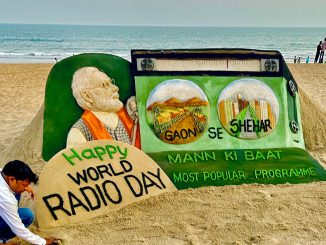
Stalls on the exhibition ground displayed thousands of antique radio sets, old and new broadcasting equipment, Digital Radio Mondiale Sets (DRM), auxiliary studio and sand art.There was also a radio repairing shop, new radio sets for sale and a handmade radio shop.Simultaneously, there were meetings, seminars, workshops and cultural programs featuring popular radio stars performing on stage.The fair also featured a Radio Jockey from Jammu and Kashmir, who said he was thankful for the chance to promote his culture through the radio.“In 2012-13, there was a decline in radio listeners, but in 2021 and 2022, the craze was back for the radio. We are here to promote the radio. Ours is a community radio which promotes our culture and we got a good platform here to do so,” Kasim, an RJ at Radio Pir Panjal from Poonch told ANI. […]

ASIA

Radio Taiwan International’s statement on #WorldRadioDay

On the occassion of World Radio Day, Radio Taiwan International (RTI) released the following statement:World Radio Day is February 13 and this year’s theme is “Radio and Peace”. During times of war, radio has been an important tool to promote access to accurate news and information.Due to the Ukraine War, Russia has blocked foreign and independent media from operating in Russia. In response, the BBC resumed its shortwave broadcasts so that people in Ukraine can access news and information, demonstrating the value of the medium. Radio Taiwan International, for its part, has increased its Russian language shortwave broadcasts to Ukraine by one hour. It has also started a Ukranian Facebook fan page to show its support as people in Ukraine fight for their freedom.

RTI’s Chairperson Cheryl Lai said: “Taiwan is constantly facing threats of the mind rather than of gunpowder, so we need to be on our guard. Rti continues its mission to broadcast the truth, foster dialogue and safeguard Taiwan’s values in order to build a foundation for peace.”The United Nations has said that radio is a pillar to prevent conflicts and build peace. Radio programs can help people have deeper clarity and conversations about current affairs, which can help prevent misunderstandings and conflicts.RTI is one of the world’s oldest radio stations in operations today and was established in 1928 by the Republic of China (ROC) government as the Central Broadcasting System (CBS) in Nanjing, China. It followed the ROC government from city to city during and after WWII, eventually coming to Taipei, Taiwan. It now broadcasts news, audio and video features about Taiwan in 18 languages. […]