US

I Went Around the World in an Hour: It’s ‘About Damn Time’

When we first looked at the Summer Song 2022 field, there were already three main candidates. “As It Was” by Harry Styles and “First Class” by Jack Harlow had become instant powers. Lizzo’s “About Damn Time” had immediate fans and clear momentum, but it was still in that mid-teens place on the CHR chart that […] […]

ASIA

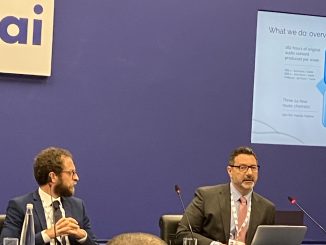
Challenges to broadcasters in the Asia Pacific region: ABU Rai Days

On day two of the ABU-Rai Days Conference, Steve Ahern, Head of the ABU Media Academy, gave an overview of the challenges to transformation in the Asia Pacific region.Steve began by highlighting the positive changes the pandemic brought: speedier digitisation, smarter work practices and newer delivery methods.However he acknowledged the purpose of the session was to highlight the challenges in such a varied region. Internal challenges included:
Lack of money, most Asian PSB take advertising
Unreliable electric power and internet unreliability, difficult for remote studios during pandemic
Transmission issues – sand, water, jamming, disasters
Old studios, new ways of production not yet achieved
Organisational approach to change – structures
Regulatory restrictions – NHK forbidden to be online
Staff mindset, unions, outdated promotion practices
Outdated training styles – didactic not point of need
While the external challenges for the region included:
Internet and phone access/expense
Not understanding audience attitudes – no longer trust, don’t want adversarial bad news, news I can use rather than news I should have
Different generational habits and expectations
Cyber attacks
Misinformation/Disinformation
Advertising agency reprioritisation to digital platforms
Internationalisation of content, less protection of culture
Increased competition: Podcasting and VOD
Unlike Europe there is no region wide uniting body so regulation and trade require bilateral relationships
Steve used two polar examples to illustrate some of these changes. The first China, where recent research by McKinsey showed that Chinese youth, due to the current financial boom had lots of money, were spending not saving but creating a demand for luxuries, including travel and media on demand. The report found that Chinese youth want:
Spontaneity
Personalisation
Ease of use
Connectivity
Sustainability
Brand power
Privacy (without giving up the other benefits)
The study concluded that, “In just three more years Gen z will make up a quarter of the Asia-Pacific region’s population. By 2030, half of all transactions in the world will take place in Asia.”The second example was Afghanistan, where the face of broadcasting has changed recently as follows:
Many stations closed or reformatted
Entertainment and music programming more restricted
Intimidation and killings of journalists
Staff and Boards replaced, controlled
Fewer women on air and on screens
Advertisers cannot pay their bills (including government)

In another session, Davide Schiappapietra, the Head of Language Content at SBS Australia, discussed ‘creating vibrant digital communities.’He said: “Public broadcaster SBS in Australia is about promoting social cohesion, how we identify with new communities through connecting on similar interests.” We are now using Augmented Reality to tell stories of people we’re talking too, convert their content to podcast feeds, music channels, feedback gathered regularly, he said.“We are reaching out on socials and still trying to understand TikTok…“What matters is the content this can then be on different platforms… we are platform agnostic… Shaping content on where the audience is i.e. WeeChat.” […]


ASIA

Station X’s Radio Listener Journey – Part 2

By Peter YiamarelosIn part one we took a look at some of the important aspects of the radio- listener relationship needed to build a successful station. In this edition we’ll look at the further aspects involved.EstablishedThe “established” phase is a when a listener will be happy to tell their friends they are a listener of your station or breakfast show, but they are still not loyal fans yetYes they are an established listener and are habitually listening to you daily but they are still listening to other stations as well.Some content directors are happy with that achievement. BUT these listeners don’t stay in this phase for long, they either become loyal fans to your station or they become loyal fans of your competitor.This is the last phase where you have to fight to win this listener over. Because once you do win them over it becomes very hard to lose them. Even when you make inevitable major content adjustments like launching a new breakfast show, changing the music or format for example.How? with over an above-promotions, with money can’t buy prizes, music tactics an entertaining content that your competitors can’t copy.

 LoyaltyThis is the phase you’ve been waiting for.The loyalty phase that you and the team have worked so hard to achieve.When this stage is achieved you can use and communicate to this community of listeners that have been out of reach in previous stages of the listener journey.Here is where you can capitalise the wealth of information available to you from this group. Through focus groups, call to action events and tactics you can drive this audience.Loyalty is the foundation you can build on audience growth incrementally.At this point your overall share is growing and gaining momentum.Remember once your station gets to no.1 to implement a defence strategy to maintain that no.1 position.A tool to help retain loyalty, while also making noise to generate awareness and all previous phases, is podcast catchups.This tool is essentially a small effort to allow your listeners to catchup on what they missed out on from their favourite show.While podcast catchups are used for the breakfast shows, it’s not uncommon to have podcast catchups for drive shows or other specialist shows within your overall line up.One of the other benefits of having a loyal listener base is that these listeners will drive most of your Time Spent Listening (TSL). While your casual listeners will drive your overall cumulative listenership numbers, your strong TSL numbers is what will drive your overall SHARE.Evangelists are those fans who talk about your station, music, or breakfast show…a lot. It’s the strongest form of word of mouth there is. Those who tell their friends, “did you hear this on station x?”These evangelists will also regularly share your digital content.That’s why your content distribution structure for social media must be set up to “spread the word” about your station by your evangelists / social reactorsCross check to ensure your social accounts are active and updated often.Finally, while your loyal fans will stick by you in the tough times, do not take them for granted. Look after them, spoil them. […]